Selecting the right digital signage platform is no longer a simple choice for businesses. Whether you operate retail stores, corporate offices, or public venues, the digital signage platform you choose affects engagement, brand impact, operational efficiency, and total cost of ownership. Samsung Tizen, LG webOS, and BrightSign are among the most widely adopted solutions. This article provides a detailed comparison of Tizen vs webOS vs BrightSign, covering installation, content management, hardware integration, and long-term performance.
Understanding the Platforms
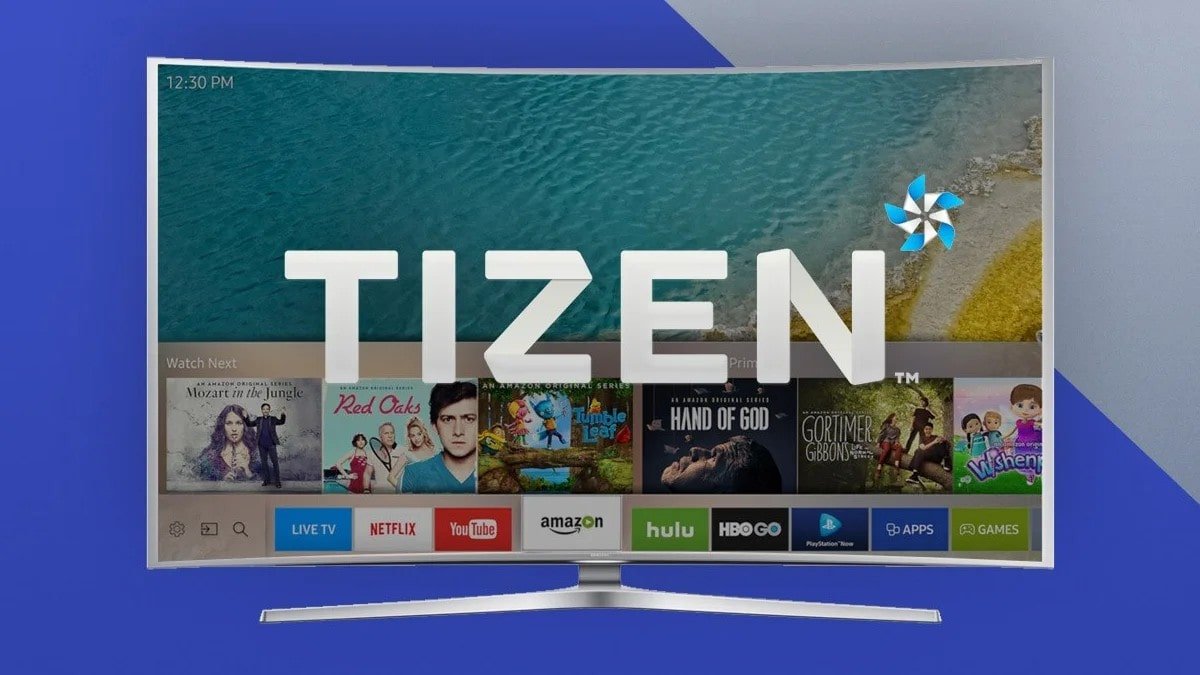
Samsung Tizen
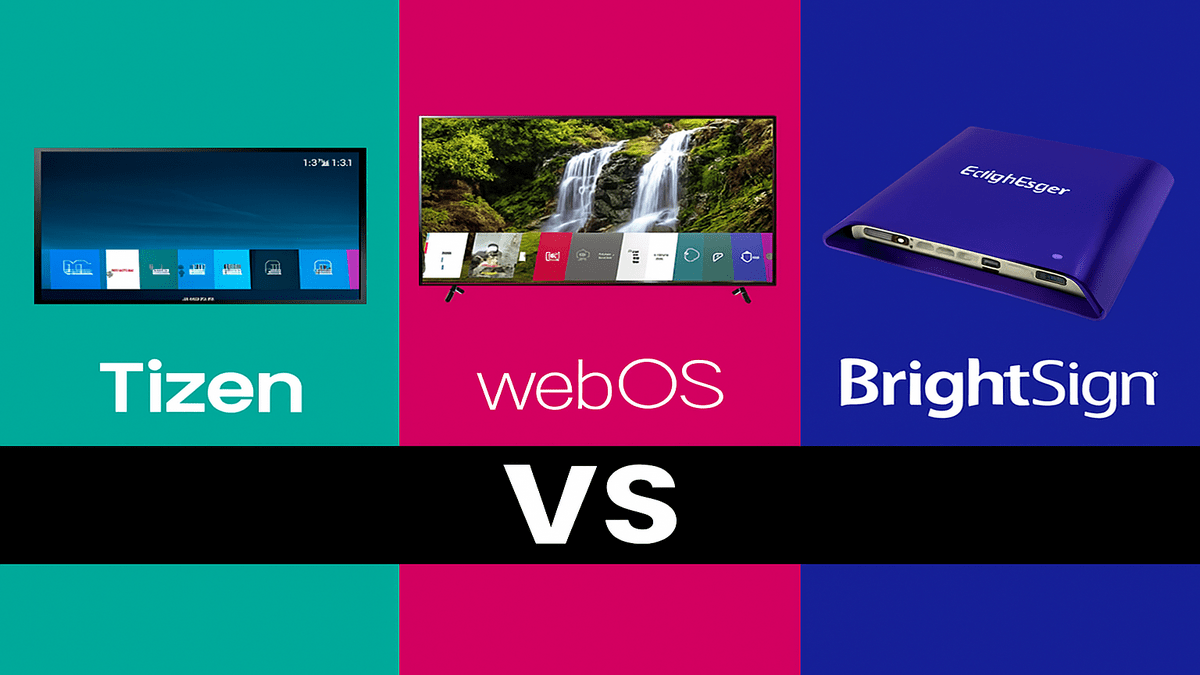
Tizen is Samsung’s proprietary operating system built for commercial displays. One of its strongest advantages is the built-in System on Chip (SoC), which eliminates the need for external media players. This simplifies installation and reduces maintenance costs. Tizen’s robust ecosystem is particularly effective for chain stores and franchise networks, providing scalable deployment, automatic content updates, and 24/7 reliability.
Additionally, Tizen supports advanced scheduling and remote management when paired with Samsung’s Smart Signage Platform (SSSP). This makes it an ideal solution for businesses seeking low-maintenance signage that can handle daily content rotations efficiently. Tizen’s compatibility with dynamic content such as live social media feeds and weather updates also allows brands to engage audiences in real time, enhancing customer experience.
LG webOS
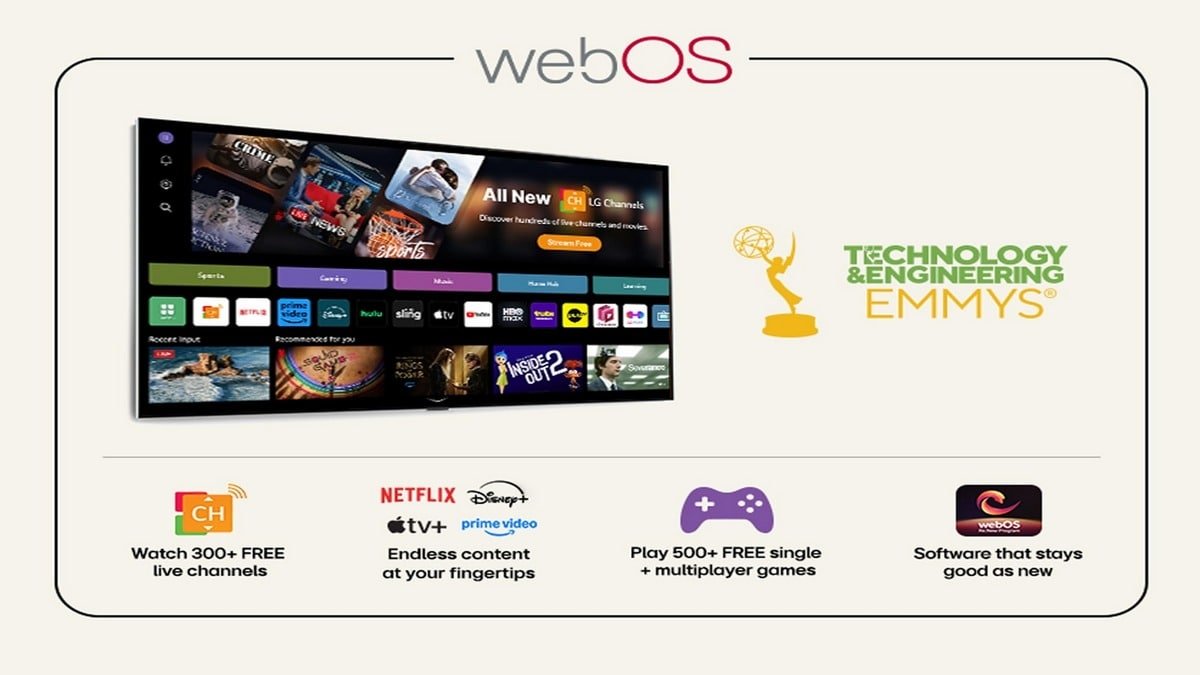
LG webOS is another SoC-powered digital signage operating system known for its intuitive interface and stability. It allows for third-party integrations, offering flexibility for businesses with diverse content management needs. WebOS supports multi-touch interactivity, making it suitable for kiosks, directories, and interactive displays.
WebOS’s CMS support ensures smooth deployment across multiple locations, while its compatibility with varied display sizes and resolutions allows it to cater to both small in-store displays and large format installations. Additionally, webOS’s open-source framework supports HTML5 applications, enabling marketers and designers to create highly customized content that aligns with branding objectives.
BrightSign
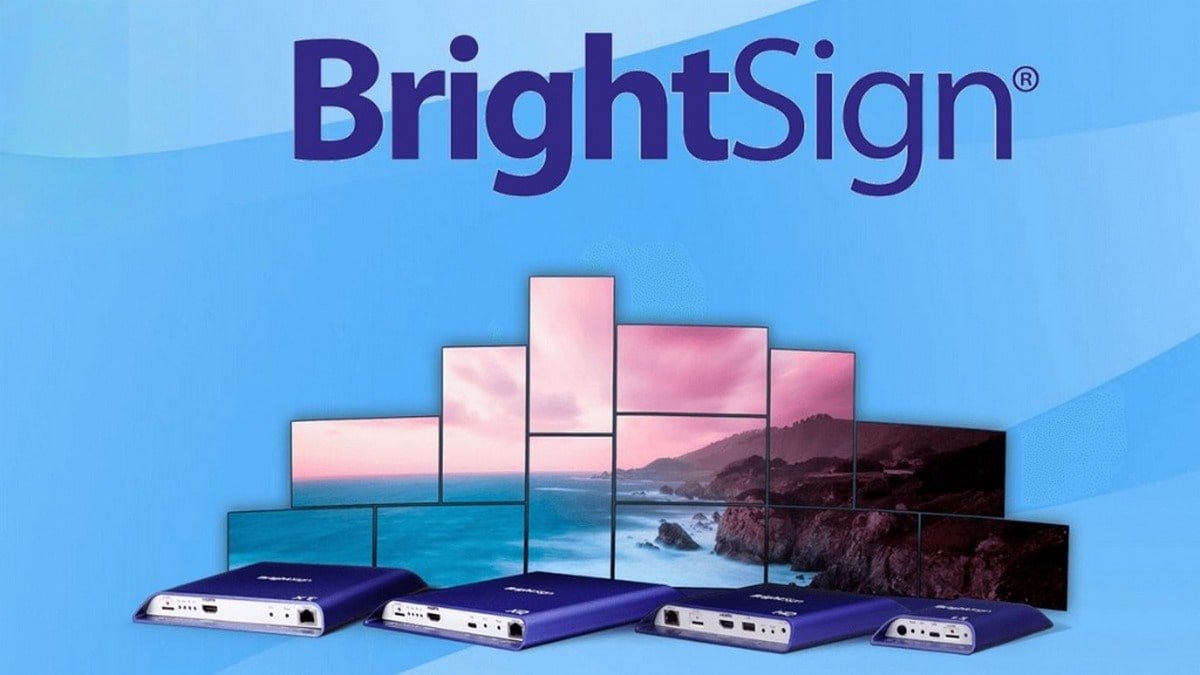
BrightSign is a hardware-based media player, designed to work with almost any display brand. Unlike Tizen and webOS, which rely on SoC architecture, BrightSign handles high-performance tasks such as synchronized video walls, interactive triggers, and advanced scheduling. BrightSign’s dedicated hardware ensures long-term reliability, even in high-traffic, mission-critical environments.
BrightSign also integrates easily with Micro LED Displays, allowing precise pixel-level control for ultra-high-resolution content. This makes it the platform of choice for large-scale installations where content fidelity is critical. Its flexibility in supporting third-party sensors, motion detectors, and interactive applications makes BrightSign a preferred solution for museums, airports, and retail spaces seeking immersive experiences.
Key Considerations for Platform Selection
Deployment and Installation
Deployment is one of the first factors to consider. Tizen and webOS are ideal for straightforward, multi-location rollouts because their SoC design minimizes hardware complexity. Businesses save on cabling, reduce failure points, and simplify content updates. BrightSign, however, offers unparalleled flexibility for heterogeneous display networks, interactive setups, and complex video walls.
The choice of display technology also plays a role. For instance, decisions like MiniLED vs OLED impact brightness, color accuracy, and viewing angles. Combining the right display technology with a capable platform ensures audiences experience optimal visual quality and reduces content distortion across large screens.
Content Management and Playback
Content management is where these platforms diverge. Tizen and webOS handle standard 4K video content well and integrate easily with most CMS solutions. BrightSign, on the other hand, provides frame-accurate playback and advanced automation, making it ideal for multi-screen synchronization, live data feeds, or interactive campaigns.
Modern installations often incorporate Micro LED Displays for superior brightness and clarity. BrightSign’s external hardware ensures smooth playback across these displays without compromising quality, especially for large-format installations. In comparison, Tizen and webOS are more suitable for environments where content updates are less frequent and advanced interactivity is not required.
Remote Management and Analytics
Monitoring and managing signage remotely is essential for large-scale networks. BrightSign offers BSN.Cloud, providing real-time device monitoring, remote content updates, and performance analytics. While Tizen and webOS support basic remote management through compatible CMS platforms, BrightSign excels in offering enterprise-level control.
Integrating Office Digital Signage Specs with platform capabilities ensures that signage meets corporate standards for brightness, resolution, and environmental compatibility. BrightSign’s versatility allows for installations that align perfectly with organizational requirements. Detailed analytics allow businesses to measure engagement, track content effectiveness, and optimize schedules for maximum audience impact.
Reliability and Continuous Operation
Commercial digital signage often runs 24/7, making reliability crucial. Tizen and webOS are dependable for general commercial use, such as retail or corporate environments. BrightSign, with its rugged design and dedicated hardware, is built for continuous operation, making it ideal for airports, transport hubs, and other high-traffic venues.
For large-scale LED installations, choosing the right pixel pitch for LED video walls is essential. BrightSign’s precise synchronization capabilities make it well-suited for video walls, ensuring uniformity and visual consistency across multiple panels. Additionally, BrightSign’s hardware can handle environmental extremes, including heat, humidity, and dust, which is a critical factor for outdoor signage or transportation hubs.
Cost and Total Ownership
From a financial perspective, Tizen and webOS are generally more cost-effective initially due to the SoC architecture that reduces external hardware requirements. BrightSign requires a higher upfront investment but provides long-term benefits through robust hardware, low maintenance, and superior customization.
Businesses with standard, high-volume deployments will benefit from Tizen or webOS for cost efficiency, while enterprises requiring complex, interactive, or large-scale installations will find BrightSign’s value proposition unmatched. Over time, BrightSign’s lower failure rates and flexible integration capabilities often offset the higher initial investment, particularly for demanding or multi-location deployments.
Use Cases for Each Platform
-
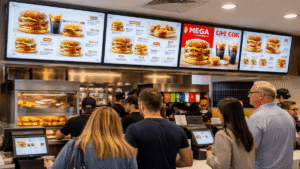
Retail Chains and Franchises: Tizen offers ease of deployment, scalability, and reliable content playback.
-
Corporate Environments: WebOS balances interface simplicity with integration flexibility, ideal for offices and lobbies.
-
High-Performance and Interactive Installations: BrightSign supports advanced synchronization, interactive kiosks, and large-scale displays.
Additionally, the choice of display type, whether MiniLED vs OLED or Micro LED Displays, should align with the platform to maximize visual quality and ensure consistent performance. BrightSign’s compatibility with a wider range of display types and resolutions allows for future-proof installations that adapt to evolving business needs.
Future Trends in Digital Signage
The digital signage industry is rapidly evolving. Artificial intelligence, touch interactivity, real-time data integration, and ultra-high-resolution displays are becoming standard. BrightSign’s external hardware allows easier upgrades and adaptation to new display technologies. Similarly, Tizen and webOS continue to improve their SoC capabilities and software ecosystems, offering smarter content management and integration with IoT devices.
Environmental sustainability is also a growing consideration. Choosing energy-efficient displays and hardware-compatible platforms reduces operational costs and carbon footprint. This factor is increasingly influencing platform selection for corporate and public installations. Additionally, as digital signage becomes more data-driven, integration with analytics platforms and CRM systems will allow brands to tailor content dynamically to specific audiences.
Conclusion
Choosing between Tizen vs webOS vs BrightSign depends heavily on your specific use case, deployment scale, and content requirements. Tizen and webOS are excellent for standardized installations, offering cost efficiency, low maintenance, and dependable performance. BrightSign is unmatched for complex, interactive, or large-scale installations, providing precise control, superior playback, and long-term reliability. By evaluating hardware compatibility, content complexity, and budget, businesses can select the ideal platform for a successful digital signage strategy.