Digital signage is becoming increasingly popular in Australia, with businesses in Melbourne and beyond leveraging advanced display technology to engage customers, communicate messages, and boost sales. When setting up a digital signage network, one of the most critical decisions is choosing the right hardware: SoC Displays vs External Media Players. This decision can impact performance, maintenance, scalability, and cost-effectiveness for your organization. In this guide, we’ll break down the differences, benefits, and best use cases to help Australian businesses make informed choices.
Understanding SoC Displays
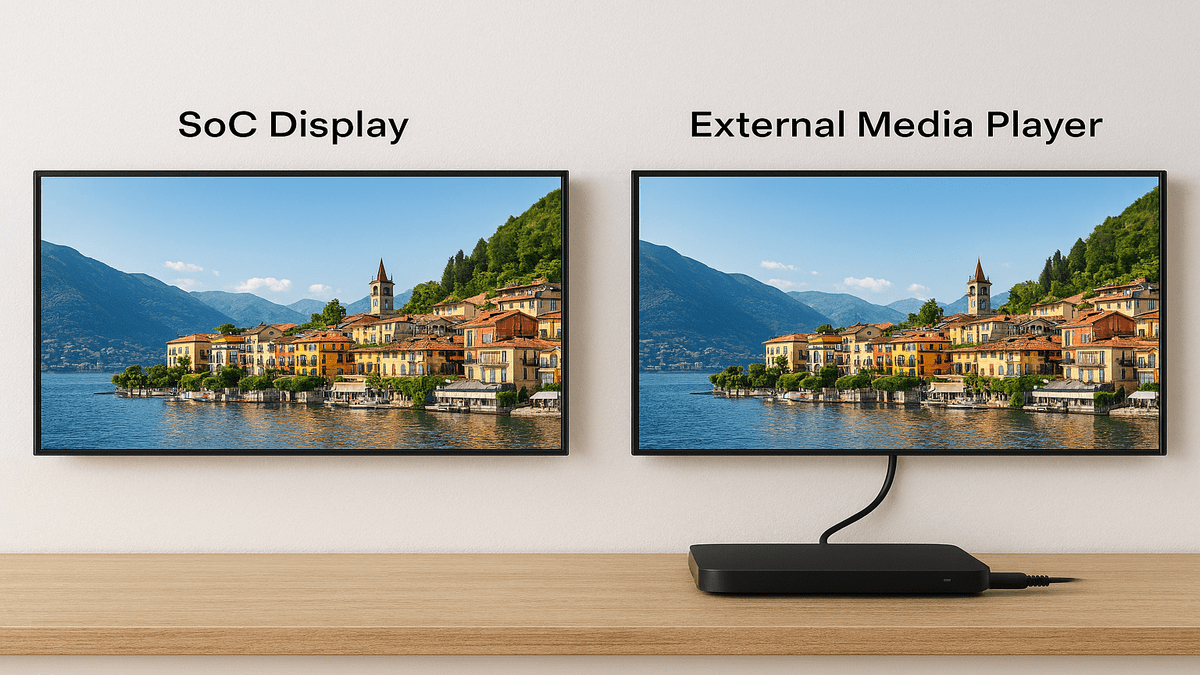
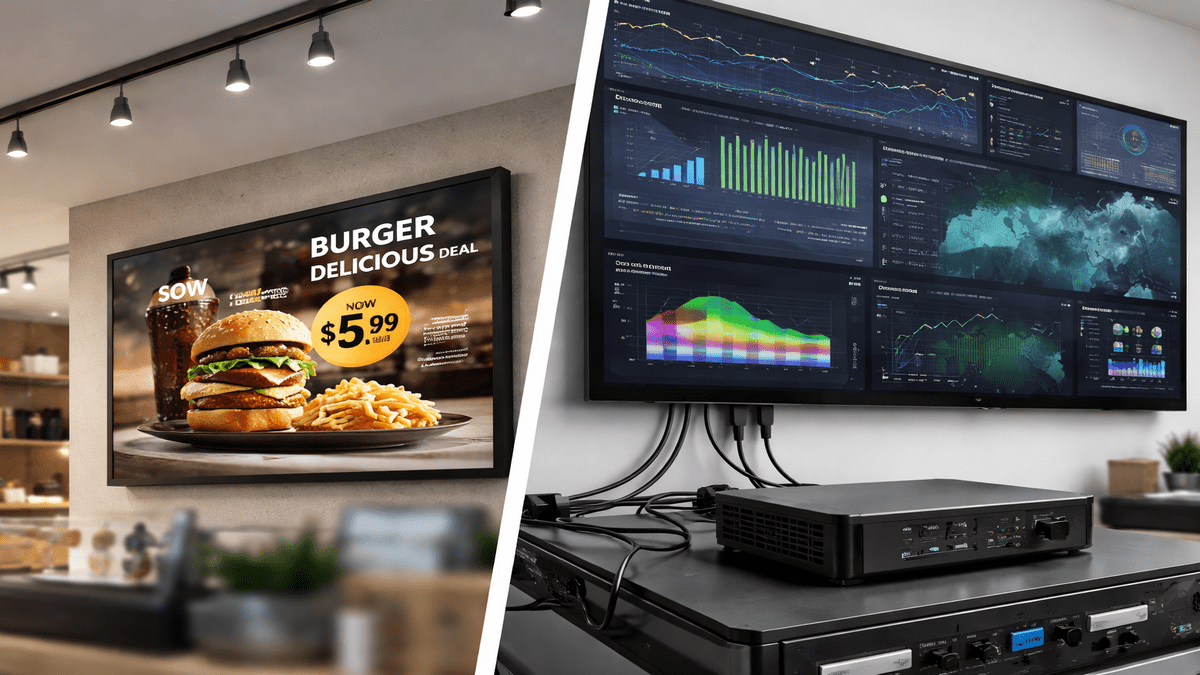
SoC stands for System on Chip. A SoC Display is an all-in-one screen that integrates the media player directly within the display panel. This setup eliminates the need for separate hardware and simplifies the installation process. Key advantages include:
-
Minimalist setup: Fewer cables and no external devices reduce installation complexity.
-
Lower upfront costs: Purchasing a single unit is often cheaper than combining a separate display with a media player.
-
Plug-and-play operation: Simply connect the screen to power and the internet, and it’s ready to display content.
SoC displays are particularly suitable for smaller deployments, such as retail shops, cafes, or single-screen setups. They are ideal when you want simplicity and a clean installation without sacrificing essential digital signage capabilities.
SoC Displays in Australian Hotels
A practical application of SoC displays in Australia is in the hospitality sector. LED Displays for Hotels often use SoC technology for digital concierge boards, lobby signage, and promotional displays. By integrating the media player into the screen, hotel managers can quickly update content without the need for IT intervention.
What Are External Media Players?
An External Media Player is a standalone device that connects to a display, typically via HDMI or other input ports. Unlike SoC displays, these devices offer more power, flexibility, and customizability for digital signage networks. Key benefits include:
-
High performance: Capable of handling 4K content, complex animations, and multi-screen setups.
-
Upgradeable: Easy to swap hardware or update software without replacing the display.
-
Flexible OS options: Supports Windows, Android, Linux, or proprietary systems.
-
Enhanced connectivity: Offers multiple input/output ports for interactive or sensor-driven content.
External media players are commonly used in larger deployments or environments where high-quality, dynamic content is essential.
Enhancing Sports Venues with External Media Players
For example, LED Stadium Displays rely on external media players to deliver high-resolution, real-time content such as live scores, advertisements, and interactive messaging. The power and flexibility of these devices ensure that stadium audiences experience seamless, high-impact visuals.
Key Differences Between SoC Displays and External Media Players
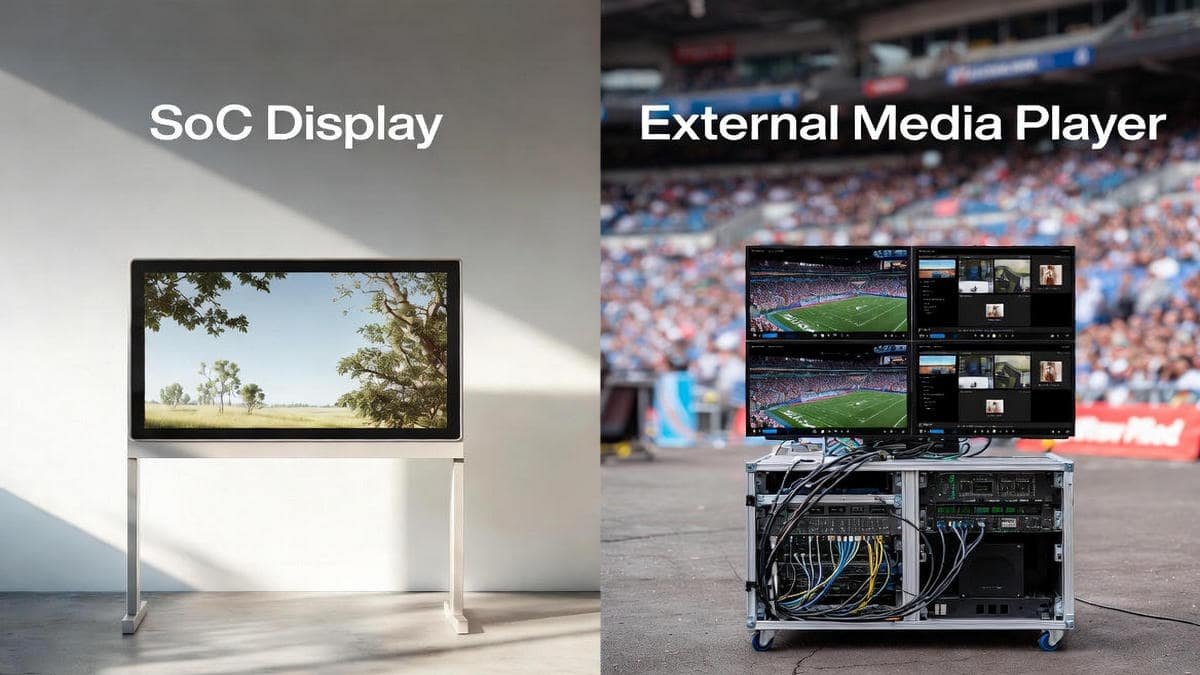 When comparing SoC Displays vs External Media Players, several factors come into play:
1. Performance
-
SoC Displays: Suitable for static images, basic videos, and simple HTML5 content.
-
External Media Players: Handles high-bitrate videos, interactive applications, and multi-screen video walls.
2. Maintenance
-
SoC Displays: Requires firmware updates for the integrated system; fewer components to manage.
-
External Media Players: Easier to troubleshoot, replace, or upgrade independently of the screen.
3. Cost
-
SoC Displays: Generally lower initial investment.
-
External Media Players: Higher upfront cost, but more scalable and adaptable for long-term expansion.
4. Flexibility
-
SoC Displays: Limited to the specifications of the display model.
-
External Media Players: Greater flexibility in hardware, software, and content management.
5. Scalability
-
SoC Displays: Best for small to medium networks.
-
External Media Players: Ideal for large-scale deployments, video walls, or complex content requirements.
Digital signage is becoming increasingly popular in Australia, with businesses in Melbourne and beyond leveraging advanced display technology to engage customers, communicate messages, and boost sales. To explore professional solutions for your needs, check out our Digital Signage Display services.
Optimizing Content with Modern Features
Australian businesses can maximize the potential of their digital signage by using advanced features in combination with the right hardware. For instance, Ways to use LED ceiling screens in retail or corporate environments can complement SoC displays for ambient messaging, while external media players can drive multi-source content and interactive campaigns.
Audience Engagement and Targeting
With external media players, businesses can implement Audience Targeting in Digital Signage, dynamically adjusting content based on demographics, time of day, or location. While SoC displays can also support basic CMS functionality, complex targeting is more effective on dedicated media players, especially across larger networks.
Making the Right Choice for Your Business
Choosing between SoC Displays vs External Media Players depends on your goals, content complexity, and network scale. Consider the following:
-
Small deployments with budget constraints: SoC displays provide an easy, cost-effective solution.
-
High-demand environments with interactive or large-scale content: External media players offer the power, flexibility, and future-proofing needed.
-
Integration with existing systems: External players support more custom applications, APIs, and advanced analytics.
-
Maintenance preferences: If you prefer a simpler, low-maintenance setup, SoC displays reduce the number of components to manage.
Industry Applications in Australia
-
Hotels: SoC displays simplify content updates and improve guest communication.
-
Stadiums: External media players provide high-quality, real-time visuals for fans.
-
Corporate and retail spaces: Both options can be effective, depending on the scale and complexity of campaigns.
By understanding the strengths and limitations of each option, businesses in Melbourne and across Australia can ensure they select the right hardware for their digital signage networks.
Conclusion
Both SoC displays and external media players have distinct advantages. SoC displays are simple, sleek, and cost-effective, making them perfect for smaller setups or budget-conscious projects. External media players provide performance, flexibility, and scalability for demanding environments where content quality and customization are critical.
Ultimately, the choice comes down to your specific requirements. For Australian businesses looking to implement digital signage that captivates audiences and drives engagement, evaluating SoC Displays vs External Media Players carefully will ensure a successful and future-proof installation.