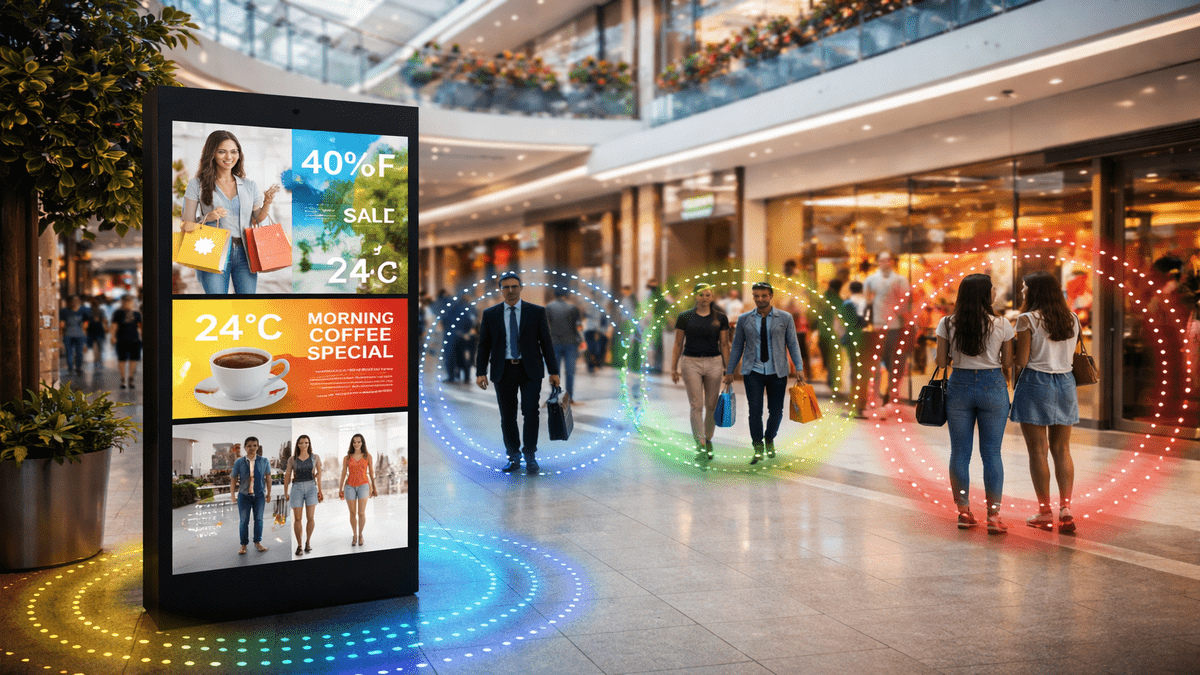
Digital signage has changed the way businesses communicate with people in physical spaces. Screens are no longer passive tools that display the same message to everyone. Instead, they have become intelligent communication channels capable of adapting content based on who is watching, where they are, and what is happening around them. This shift has made Audience Targeting in Digital Signage one of the most important strategies for brands that want to stay relevant and competitive.
Modern audiences expect content to feel timely and meaningful. When a message feels generic, it is often ignored within seconds. Targeted digital signage solves this problem by aligning messages with viewer needs and real-world context. Rather than overwhelming users with information, smart targeting delivers clarity, relevance, and value.
In this article, we break down five practical and proven ways businesses can use audience targeting to reach the right viewers without increasing complexity or sacrificing user experience.
What Is Audience Targeting in Digital Signage?
Audience targeting refers to the process of delivering specific content to specific groups of viewers based on defined criteria. These criteria can include location, time, environment, audience profile, or real-time conditions. Audience Targeting in Digital Signage allows screens to behave more like adaptive media platforms than static billboards.
Instead of asking “What content should we show today?”, businesses begin to ask more strategic questions such as:
-
Who is most likely to see this screen?
-
What are they doing at this moment?
-
What message would be most useful or engaging right now?
Answering these questions is the foundation of effective targeting.
Why Poorly Targeted Screens Fail?
Before exploring the solutions, it is important to understand why many digital signage deployments underperform. Common issues include:
-
Repeating the same content all day
-
Ignoring differences between locations
-
Showing messages that do not match the viewer’s intent
-
Overloading screens with too much information
Audience Targeting in Digital Signage directly addresses these problems by introducing structure, logic, and adaptability into content planning.
5 Smart Ways to Reach the Right Viewers
Below are five targeting methods that balance effectiveness with simplicity. Each method can work independently, but the strongest results come from combining them strategically.
1. Location-Based Targeting
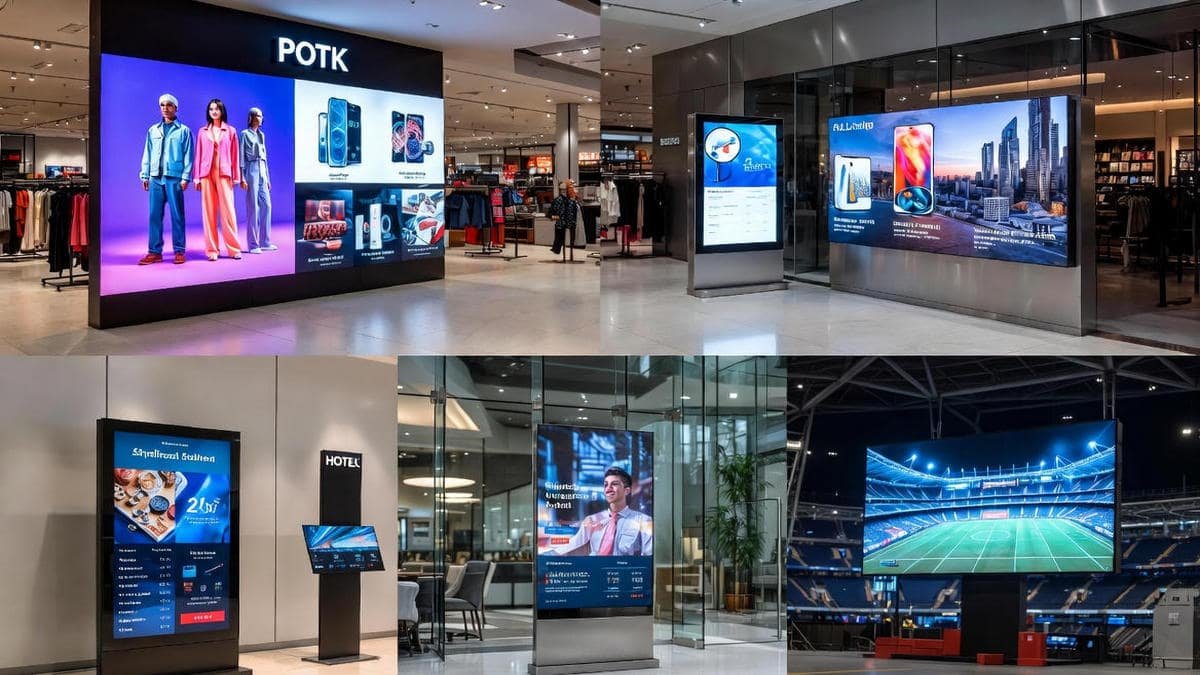
Location is one of the most powerful indicators of audience intent. A person standing in a retail store, hotel lobby, stadium, or office building has very different expectations depending on where they are.
Location-based targeting focuses on tailoring content to the physical environment of the screen. In Australia, our Digital Signage Display solutions are designed for indoor and outdoor spaces, ensuring your messages reach the right viewers wherever they are.
Key advantages of location-based targeting:
-
Content feels immediately relevant
-
Messaging aligns with viewer mindset
-
Screens support the purpose of the space
Practical examples include:
-
Promotional content in retail areas
-
Informational content in corporate lobbies
-
Directional messaging in public venues
In hospitality environments, this approach is often applied through LED Displays for Hotels, where screens are customized for reception areas, conference zones, and guest lounges. Each location serves a different purpose, and targeted content improves both communication and experience.
Audience Targeting in Digital Signage becomes far more effective when the physical context of the screen is treated as a strategic variable rather than an afterthought.
2. Time and Event-Based Targeting
Audiences change throughout the day. Morning viewers are different from evening viewers, and weekday behavior often differs from weekends. Time-based targeting, sometimes called dayparting, allows businesses to schedule content according to predictable audience patterns.
This method focuses on when content is shown rather than where.
Common time-based targeting opportunities:
-
Morning vs afternoon vs evening
-
Weekdays vs weekends
-
Seasonal changes
-
Special events and holidays
Event-based targeting is a natural extension of this strategy. During large-scale events, sports matches, or sales campaigns, screens can shift to event-specific messaging. This is particularly effective in large venues that use LED Stadium Displays to communicate with massive audiences in short timeframes.
Audience Targeting in Digital Signage ensures that screens remain dynamic and responsive instead of repetitive and stale.
3. Demographic-Aware Targeting
Demographic targeting does not rely on identifying individuals. Instead, it uses aggregated patterns to understand who is most likely to be present in a given space. These insights help shape content style, tone, and complexity.
Demographic-aware targeting typically considers:
-
Age groups
-
Professional vs casual audiences
-
Families vs individuals
-
Local vs transient visitors
For example, business districts may benefit from concise, information-driven messaging, while entertainment venues often perform better with visually rich and energetic content. Audience Targeting in Digital Signage allows businesses to align visual language with audience expectations without becoming intrusive.
Creative display designs also play a role here. Architectural solutions such as Ways to use LED ceiling screens often reflect demographic preferences by creating immersive experiences that resonate with specific audience groups while maintaining visual comfort.
4. Context-Aware and Environment-Based Targeting
Context-aware targeting responds to external conditions rather than audience profiles alone. This method adjusts content based on factors such as weather, temperature, lighting conditions, or crowd density.
Examples of context-aware targeting include:
-
Weather-based promotions
-
Adjusting brightness and contrast based on ambient light
-
Switching content when spaces become crowded
-
Highlighting indoor experiences during poor weather
This approach makes digital signage feel intelligent and responsive rather than scripted. Audience Targeting in Digital Signage benefits greatly from contextual awareness because it mirrors how humans naturally adapt communication based on their surroundings.
In modern architecture, transparent displays are increasingly used to deliver contextual messaging without blocking visibility. Understanding Transparent LED Screens Installation Methods helps ensure that content integrates seamlessly with glass surfaces while remaining legible and relevant.
5. AI and Real-Time Audience Targeting
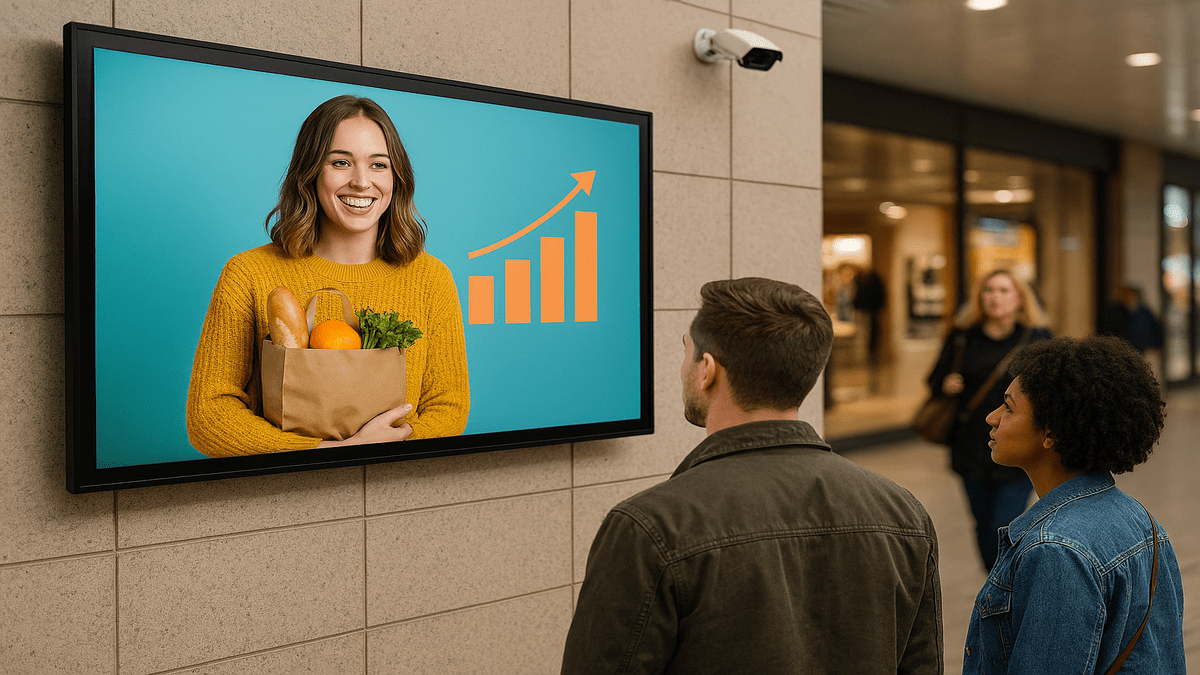
The most advanced form of targeting uses artificial intelligence and real-time analytics. AI-powered systems can analyze anonymous audience data such as dwell time, movement patterns, or estimated group size to trigger the most appropriate content.
This method offers several advantages:
-
Content adapts instantly
-
Engagement can be measured more accurately
-
Messaging improves over time through learning
Audience Targeting in Digital Signage powered by AI does not require storing personal data. Instead, it focuses on patterns and probabilities, making it both effective and privacy-conscious.
Real-time targeting also supports fallback strategies. When no audience is detected or when confidence levels are low, screens can display neutral brand content, ensuring consistent visual presence without forced personalization.
How to Combine These Strategies Effectively?
The most successful deployments do not rely on a single targeting method. Instead, they combine multiple layers in a simple hierarchy.
A practical combination might look like this:
-
Location defines the base content
-
Time refines the message
-
Context adjusts relevance
-
AI optimizes delivery
Audience Targeting in Digital Signage works best when rules are clear and manageable. Overcomplicating logic often reduces reliability and increases maintenance effort.
Measuring Success Without Overload
To maintain performance, businesses should focus on a small set of meaningful metrics rather than tracking everything.
Useful performance indicators include:
-
Average dwell time
-
Content playback frequency
-
Audience flow patterns
-
Engagement proxies such as QR scans or inquiries
Audience Targeting in Digital Signage delivers long-term value when insights are used to refine future content rather than simply reporting past performance.
Common Mistakes to Avoid
Despite its benefits, targeting can fail if applied incorrectly. Common mistakes include:
-
Targeting too aggressively
-
Ignoring brand consistency
-
Using too many rules
-
Failing to test content variations
Audience Targeting in Digital Signage should enhance communication, not complicate it. Simplicity, clarity, and iteration are key to sustainable success.
The Long-Term Value of Smart Targeting
As display technology and analytics continue to evolve, targeted digital signage will become the standard rather than the exception. Screens that understand context, timing, and audience intent will outperform static displays in both engagement and ROI.
Audience Targeting in Digital Signage positions businesses to communicate more effectively in physical spaces where attention is limited and competition is high. By focusing on relevance instead of volume, brands can turn screens into meaningful touchpoints that support real business outcomes.
Conclusion
Reaching the right viewers is not about showing more content; it is about showing the right content at the right moment. Through location awareness, timing, demographics, context, and AI, businesses can build digital signage strategies that are intelligent, respectful, and highly effective.
Audience Targeting in Digital Signage is not a trend. It is a strategic shift toward smarter communication that aligns technology with human behavior.