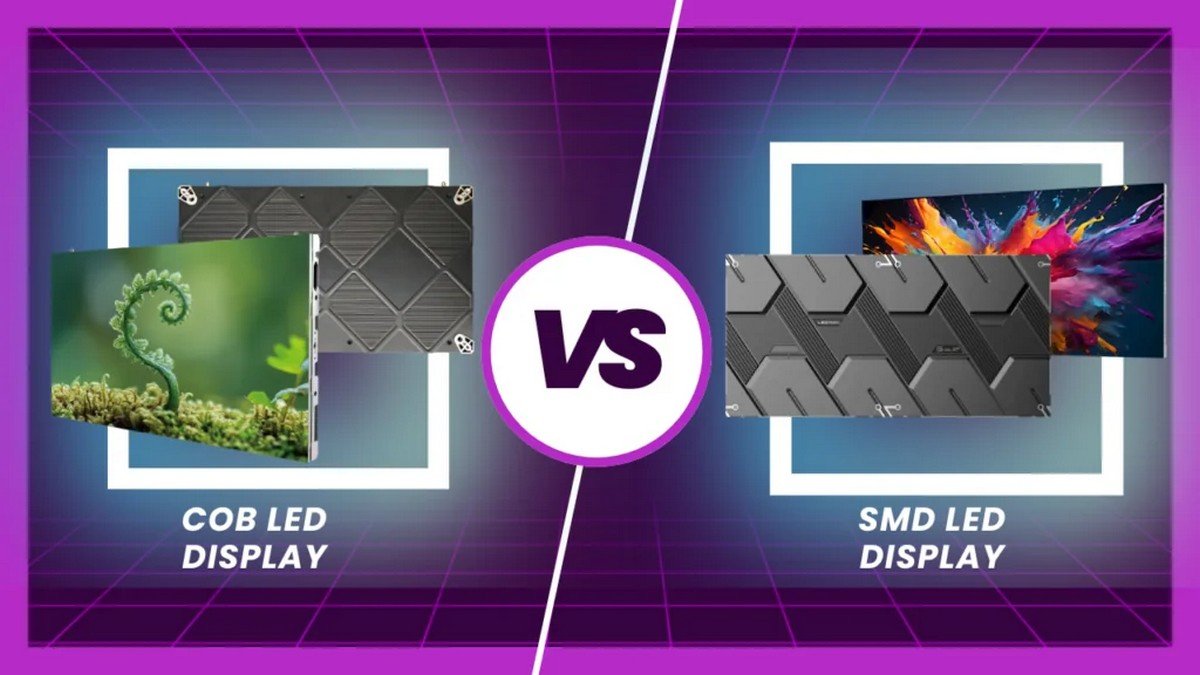
The LED display industry has evolved dramatically over the past decade. From the early days of pixelated billboards to today’s ultra-high-definition video walls, display technology continues to push boundaries. Among the most discussed advancements are SMD vs COB Technology in LED Video Walls, two different LED packaging methods that shape how displays perform in brightness, resolution, and durability.
Understanding the difference between SMD (Surface-Mounted Device) and COB (Chip on Board) technology is essential for anyone investing in LED video walls — whether for indoor showrooms, outdoor advertising, or high-end corporate installations. Let’s take a closer look at how these technologies compare, their unique advantages, and where each one shines.
1. What Is SMD Technology?
SMD, or Surface-Mounted Device, refers to LEDs mounted directly onto the surface of a printed circuit board (PCB). In SMD vs COB Technology in LED Video Walls, SMD has been the traditional choice for years because it offers excellent color accuracy and flexibility.
Each pixel in an SMD display is made up of three tiny diodes — red, green, and blue — encapsulated together in a single housing. This configuration allows for a wide color gamut and precise image reproduction. SMD screens are highly customizable, supporting various pixel pitches (distance between pixels), which makes them suitable for both indoor and outdoor environments.
Their modular structure also simplifies maintenance. If one module fails, technicians can easily replace it without affecting the rest of the display.
2. What Is COB Technology?
COB, or Chip on Board, represents the next generation of LED display technology. Instead of mounting individual diodes on the surface, COB involves directly bonding multiple LED chips to the substrate and sealing them with epoxy resin. In SMD vs COB Technology in LED Video Walls, this approach offers superior durability, heat dissipation, and energy efficiency.
Because COB eliminates the need for individual LED packages, it allows for denser pixel placement — meaning higher resolution within the same area. Moreover, the protective resin coating makes COB screens resistant to moisture, dust, and impact. This makes them ideal for high-traffic areas or environments where durability is key.
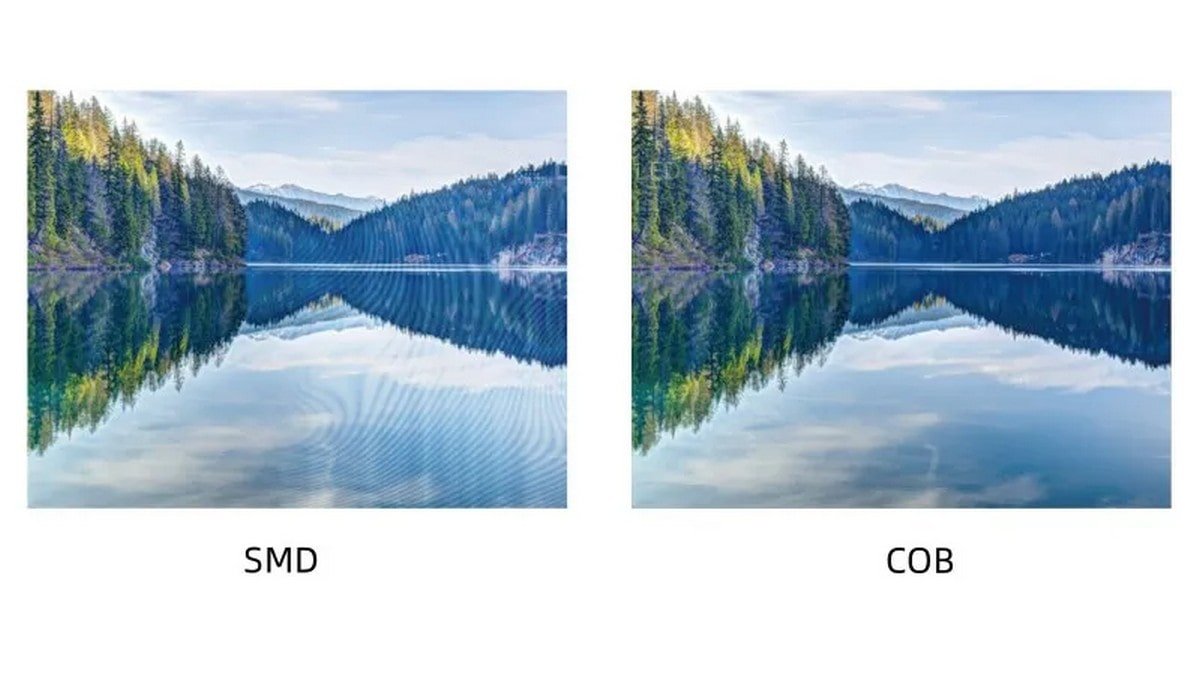
The seamless surface also gives COB LEDs a smoother appearance with reduced glare and reflection, resulting in better viewing comfort and deeper contrast levels.
3. Brightness and Color Accuracy
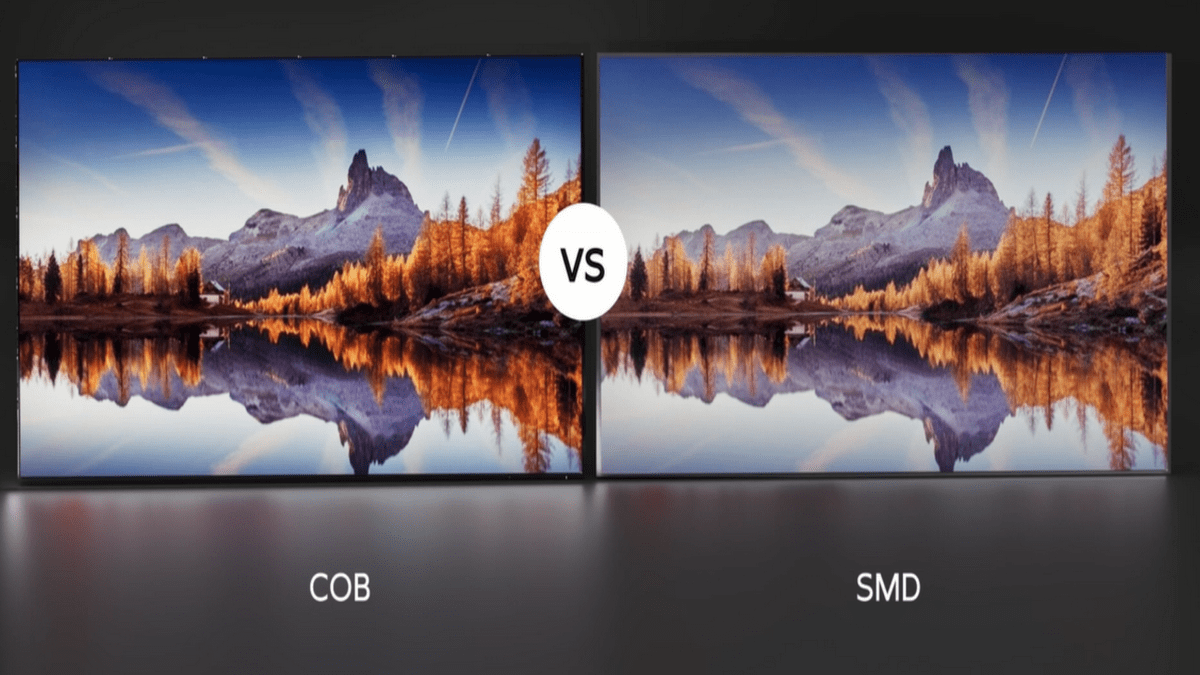
When comparing SMD vs COB Technology in LED Video Walls, brightness and color performance are critical factors. SMD technology tends to deliver higher brightness levels, which makes it well-suited for outdoor and large-scale installations. On the other hand, COB screens, while slightly less bright, provide more uniform light distribution and better color consistency at close viewing distances.
For indoor applications where viewers are near the screen — such as retail showrooms, boardrooms, or broadcast studios — COB technology often provides a superior experience. It offers finer pixel pitches and smoother gradients, ensuring that even small text and fine details appear crystal clear.
4. Durability and Maintenance
Durability is another key distinction between SMD vs COB Technology in LED Video Walls. Because SMD LEDs are exposed on the surface, they’re more vulnerable to impact, moisture, or dust. COB LEDs, on the other hand, have a protective resin coating that seals the chips completely, providing excellent resistance to physical damage.
This makes COB displays more reliable for long-term use, especially in public environments where accidental contact or cleaning is frequent. The sealed surface also means easier maintenance — no need for delicate cleaning tools or protective covers.
Interestingly, these qualities are similar to the ruggedness required in Outdoor Drive Through Digital Signage, where displays must withstand constant exposure to elements while maintaining visual clarity. The same concept of resilience applies to COB LED panels in indoor commercial use.
5. Viewing Angle and Visual Comfort
One of the major advantages of COB technology is its wide viewing angle. Because light emission is more evenly distributed, viewers can see consistent brightness and color even from sharp angles. In SMD vs COB Technology in LED Video Walls, this makes COB the preferred choice for immersive environments or large audiences, such as lobbies or exhibition halls.
SMD screens, while still offering excellent clarity, may lose some brightness when viewed from extreme angles. However, they remain more versatile for curved or irregular installations due to their flexible design options.
6. Heat Dissipation and Energy Efficiency
COB technology naturally excels at heat management because the chips are mounted directly onto the substrate, allowing for efficient thermal conduction. This results in lower operating temperatures and longer lifespan. SMD LEDs rely more on external heat sinks, which can slightly increase power consumption.
For companies focusing on sustainability, COB solutions provide a more energy-efficient option. They consume less power and maintain stable performance even during extended operation — a critical factor for 24/7 video walls in airports, malls, or control centers.
7. Cost and Production Differences
The cost comparison in SMD vs COB Technology in LED Video Walls depends on scale and application. Currently, SMD displays are more affordable because their production process is mature and standardized. However, as COB manufacturing becomes more common, prices are gradually decreasing.
For large installations where brightness and modularity are priorities, SMD remains cost-effective. But for premium indoor environments that demand high resolution, COB provides greater long-term value due to its longevity and low maintenance needs.
In many ways, the cost-benefit analysis resembles double sided digital signs, where initial investment may be higher, but the improved visibility and durability deliver superior ROI over time.
8. Applications of SMD and COB LED Displays
Both technologies serve distinct purposes based on environment and audience. SMD LED video walls are ideal for stadiums, outdoor advertising, and live events due to their brightness and flexibility. COB displays shine in indoor settings where resolution, durability, and design integration matter most — such as corporate lobbies, museums, and conference centers.
Educational institutions, for instance, are increasingly using LED displays for communication and engagement. The Importance of Digital Signage in Schools and Universities highlights how visual communication tools enhance learning, safety, and interactivity — principles that also apply to COB technology’s high-definition capabilities in indoor spaces.
9. Future Trends and Innovations
The ongoing debate around SMD vs COB Technology in LED Video Walls will likely shift as manufacturing methods improve. COB is rapidly gaining traction for ultra-fine pixel pitch displays (below 1.0mm), where seamless visuals are essential. Future innovations may combine the best of both worlds — the flexibility of SMD with the resilience and uniformity of COB.
Additionally, microLED and flip-chip COB technologies are emerging, promising even higher contrast ratios, better efficiency, and longer lifespans. These trends suggest that COB may soon become the standard for premium indoor applications, while SMD continues to dominate outdoor and budget-friendly markets.
10. Which Technology Should You Choose?
Choosing between SMD and COB comes down to specific use cases. If your project demands high brightness, modular repairability, and outdoor versatility, SMD is likely the better fit. However, if you prioritize resolution, durability, and long-term reliability, COB is the smarter choice.
In essence, both represent milestones in LED development. The decision isn’t about which is universally superior, but rather which best aligns with your goals, budget, and installation environment. Companies that understand the nuances of SMD vs COB Technology in LED Video Walls can make more informed investment choices that maximize visual performance and ROI.
Conclusion
The evolution from SMD to COB represents more than just a technological shift — it’s a leap toward smarter, more efficient, and visually immersive display systems. Whether you’re designing an indoor control room, a retail environment, or an architectural video wall, knowing the strengths of each technology ensures the best possible outcome.
In the end, SMD vs COB Technology in LED Video Walls is not a competition but a convergence of innovation. Each has its role, and together, they shape the future of digital display design and performance.