
In the modern world of marketing, businesses are shifting from traditional printed posters to sleek, dynamic digital displays. This shift has sparked a vital question: what exactly is The Cost Difference Between Print and Digital Signage? Understanding this difference can help companies make smarter financial and branding decisions in 2025 and beyond.
The Cost Difference Between Print and Digital Signage
Before diving deeper, let’s take a closer look at what we’ll explore in this guide.
In the following sections, we’ll break down The Cost Difference Between Print and Digital Signage step by step — from initial setup costs and hidden maintenance fees to long-term savings, environmental impact, and return on investment.
We’ll also discuss how technology, hardware selection, and design decisions influence the total cost, helping you understand which option truly delivers better value for your business.
1. Print vs Digital: A Shift in Communication
Printed signage has been the go-to medium for decades, offering a simple and accessible way to display information. Yet, as technology evolves, digital signage is quickly becoming the preferred choice for businesses that value flexibility, sustainability, and impact.
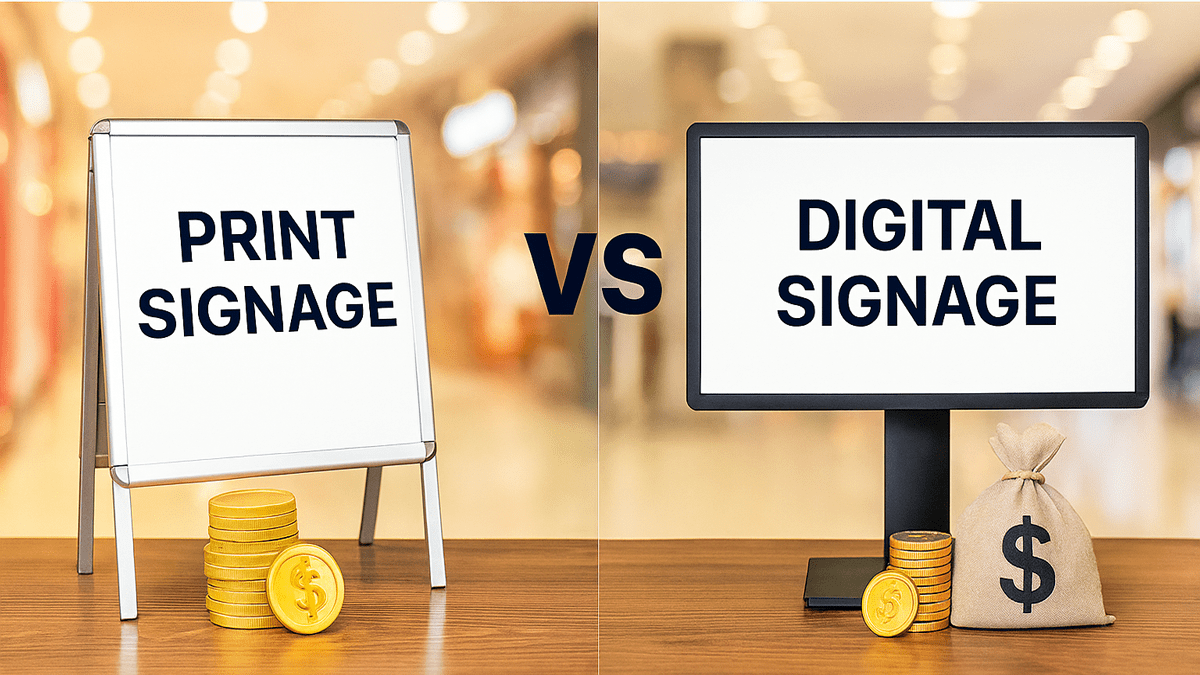
At first glance, print signage seems cheaper — after all, a single banner or poster doesn’t cost much. But when you factor in repeated printing, shipping, and replacement, The Cost Difference Between Print and Digital Signage becomes apparent. Digital may cost more upfront, but its ability to update content instantly eliminates recurring expenses.
 2. Breaking Down the Initial Costs
The upfront investment in digital signage includes displays, media players, and software. These costs can appear steep compared to a stack of printed posters, but the long-term math tells another story. Over time, the expenses of reprinting and reinstalling physical materials can far exceed the one-time setup of digital systems.
You’ll also need to choose the right hardware and software. For instance, when selecting a media platform, businesses often compare Tizen vs webOS vs BrightSign to determine which offers the best performance and cost efficiency. This choice directly influences both long-term reliability and maintenance costs.
3. Long-Term Value and Savings
When analyzed over a year or two, The Cost Difference Between Print and Digital Signage becomes clear. Digital signage wins in terms of long-term value. Instead of paying repeatedly for new prints, businesses can change campaigns in minutes — remotely and instantly.
A restaurant can update its menu boards throughout the day. A retail store can launch flash sales without waiting for printers. Corporate offices can display live dashboards and announcements. This level of flexibility saves time and money while increasing brand responsiveness.
4. Hidden Costs That Businesses Often Overlook
Both print and digital signage come with hidden costs. For print, there’s the expense of reprints, transportation, labor, and physical storage. For digital, power consumption and occasional maintenance must be considered.
However, most modern LED displays are highly energy-efficient, and smart scheduling tools reduce screen-on time. To minimize potential downtime, businesses should be aware of Common technical problems with digital displays such as connectivity issues, overheating, or software glitches — and plan regular maintenance to prevent them.
5. The Role of Technology and Hardware Choice
Technology defines the lifespan and cost efficiency of digital signage. Choosing the right type of display, media player, and management software can significantly reduce future expenses.
For example, Choosing the Right Digital Signage Display is crucial to balancing quality with cost. A professional-grade commercial display will last longer and perform better under continuous use than a consumer TV. Although it might cost more upfront, it reduces long-term repair and replacement costs — a smart move for any business looking for sustainability.
6. Visual Quality and Pixel Precision
When opting for LED walls or large displays, choosing the right pixel pitch for LED video walls becomes a major cost factor. A smaller pixel pitch offers higher resolution and sharper visuals but increases production cost. Conversely, a larger pitch is more economical but less crisp up close. Understanding viewing distance and audience size helps businesses invest wisely without overspending.
This delicate balance between cost and quality is another factor that defines The Cost Difference Between Print and Digital Signage.
7. Sustainability and Environmental Impact
Another major advantage of digital signage is its eco-friendliness. Print signs require paper, ink, and plastic — all of which contribute to environmental waste. Digital displays eliminate the need for constant printing and shipping, reducing a company’s carbon footprint significantly.
For modern Australian businesses, sustainability isn’t just a bonus — it’s a brand statement. Customers appreciate environmentally conscious companies, and this perception can indirectly drive sales and loyalty.
8. Labor, Flexibility, and Time Efficiency
Digital signage eliminates the manual work that comes with print materials. Instead of coordinating with printers and installers, businesses can upload new content instantly through cloud-based systems. This not only saves money but also improves agility.
The human labor costs behind traditional signage are often overlooked when calculating The Cost Difference Between Print and Digital Signage. Updating dozens of posters across multiple locations requires designers, logistics teams, and installers. Digital signage centralizes all that effort into a few clicks.
9. Scalability: Growing Without Growing Costs
Once a digital signage network is established, scaling becomes easier and cheaper. Adding new displays to an existing network doesn’t require new design and print runs — it’s simply about duplicating digital content.
In contrast, each new print campaign means fresh design fees, materials, and shipping costs. This scalability gives digital signage a clear long-term advantage, particularly for expanding franchises and nationwide retailers in Australia.
10. Return on Investment and Measurable Results
Another key differentiator between the two formats is analytics. Digital signage offers measurable ROI through engagement metrics, content scheduling, and real-time adjustments. Print signage provides no such data — once it’s on the wall, you can’t track its effectiveness.
This ability to measure and optimize campaigns makes digital signage far more efficient. You can identify which messages attract attention and adjust your strategy accordingly. It’s an agile, data-driven approach that turns displays into active marketing tools, not passive visuals.
11. The Aesthetic and Branding Advantage
Aesthetically, digital signage simply looks better. Vibrant animations, motion effects, and high-definition imagery attract attention far more effectively than static posters. Moreover, maintaining brand consistency across multiple locations is easier with centralized content management.
Print materials fade, tear, and become outdated quickly. Digital signage remains sharp and relevant — a constant reflection of innovation and professionalism. This visual appeal is an often-underestimated part of The Cost Difference Between Print and Digital Signage.
 12. When Print Still Makes Sense
While digital signage is the smarter investment overall, print isn’t obsolete. For short-term events, temporary promotions, or remote locations without reliable power, print still serves a purpose. However, the long-term economics clearly favor digital.
As display technology becomes more affordable, software more intuitive, and electricity costs more manageable, the balance continues to shift.
13. The Future: Narrowing the Cost Gap
The gap in The Cost Difference Between Print and Digital Signage is narrowing every year. As the price of digital hardware decreases, even small businesses can now afford professional-grade solutions. Meanwhile, rising costs of printing materials and labor make print less attractive.
Businesses that invest in digital today not only save money over time but also future-proof their communication strategy.
Conclusion
Ultimately, The Cost Difference Between Print and Digital Signage goes beyond numbers. It’s about adaptability, reach, and perception. Digital signage enables businesses to respond instantly to market changes, engage audiences in real time, and maintain a modern image that print simply can’t match.
As we move further into the digital era, the choice is clear: from posters to pixels, digital signage isn’t just the future — it’s the smarter investment today.