
An LED Video Wall is a high-impact visual display made by seamlessly combining multiple LED panels into one continuous screen, delivering exceptional brightness, clarity, and color accuracy at any size. Designed for both indoor and outdoor use, our LED Video Wall solutions transform spaces into immersive visual experiences, perfect for retail stores, corporate events, stadiums, exhibitions, control rooms, and public spaces. We proudly deliver our LED Video Wall solutions to businesses and organizations across Melbourne and Sydney, ensuring professional installation and ongoing support for every project.
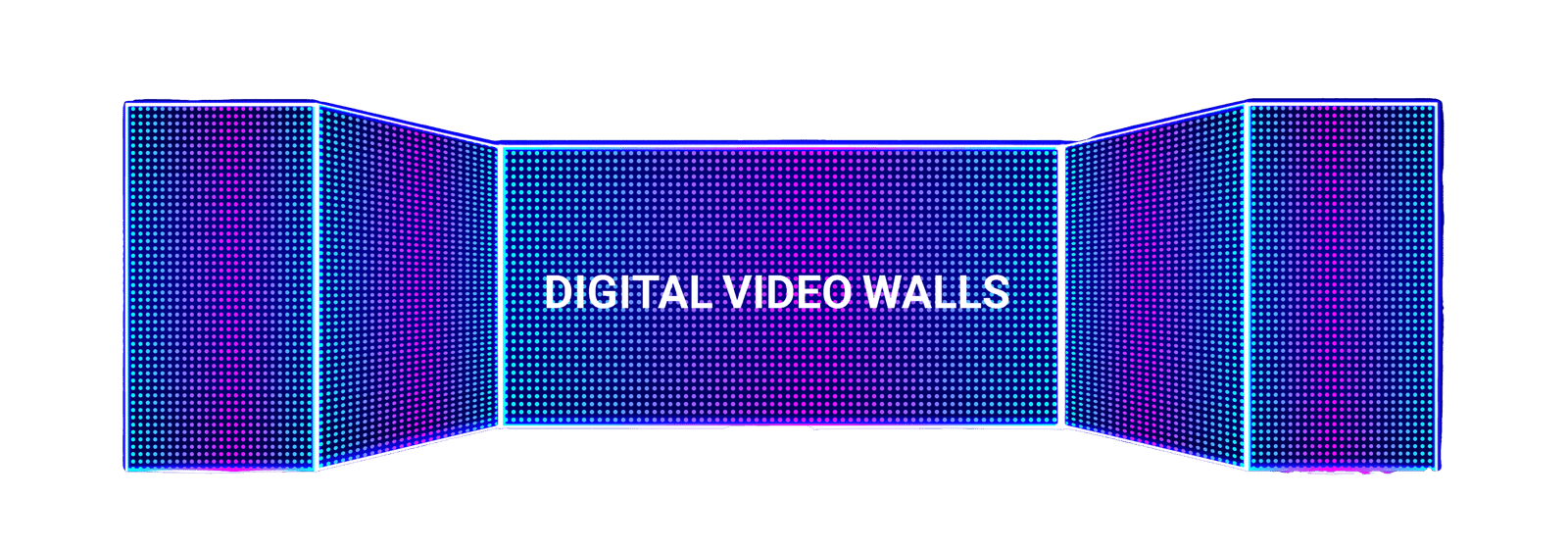
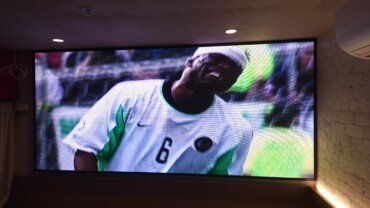
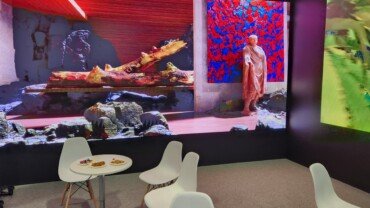
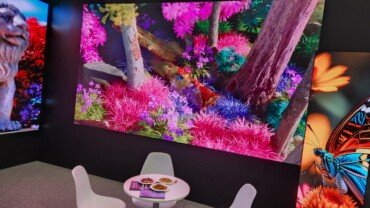
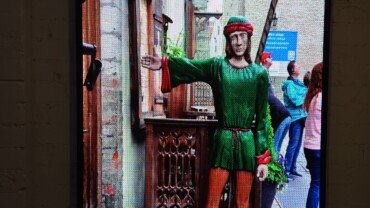
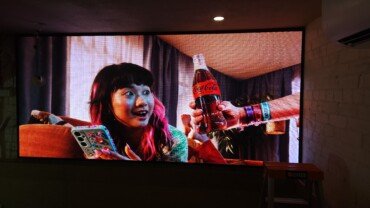
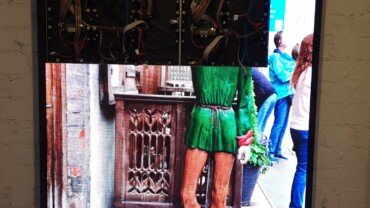
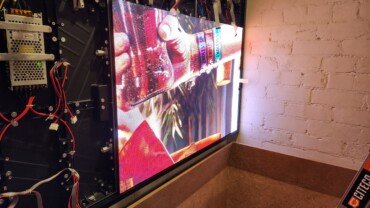
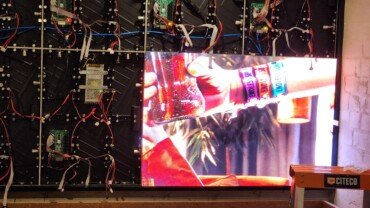
Delivers smooth, high-resolution visuals with virtually no bezels.
Easily customized to fit any space or layout requirements.
Clear and vivid display performance in any situation.
Built for continuous use with quick-access maintenance options.
Create a larger, brighter and more immersive visual experience with a professionally designed LED video wall from AXSS.
We design, supply and install commercial LED video wall systems for retail stores, corporate environments, showrooms, hospitality venues, entertainment spaces, control rooms, public environments and other professional applications across Australia.
Unlike a conventional television or multi-screen LCD installation, a direct-view LED video wall is built from modular LED cabinets that work together as one virtually seamless digital canvas. This allows the display to be engineered around your available space, viewing distance, content and business objectives rather than forcing the project into a standard screen size.
From the initial consultation and site assessment to display specification, mounting, installation, calibration, content management and ongoing support, AXSS provides an end-to-end solution designed around real-world commercial use.
Need help choosing the right LED wall?
Speak with AXSS about your project, screen dimensions, viewing distance, pixel pitch and installation requirements.
CTA: Request an LED Video Wall Quote
Secondary CTA: Book a Site Assessment
A successful commercial display project starts with more than choosing a screen.
The right LED video wall needs to match the physical environment, audience, content, operating hours and viewing conditions of the location.
A corporate boardroom displaying presentations and detailed spreadsheets may require a very different pixel pitch from a large LED wall installed in a shopping centre atrium. A retail display exposed to strong ambient light may require more brightness than a video wall operating in a controlled office environment. An outdoor installation must also consider weather protection, sunlight, structural engineering and environmental conditions.
AXSS approaches LED video wall projects as complete display systems.
Depending on the project, this can include the LED cabinets, mounting structure, video processor, controller, power distribution, network connectivity, media player, content management platform and service access required to keep the display practical to operate and maintain.
The result is not simply a collection of LED panels.
It is a commercial visual communication system designed for your specific space.
An LED video wall is a large-format digital display constructed from multiple modular LED panels or cabinets.
When the cabinets are correctly mounted, aligned and calibrated, they work together as a single visual canvas.
Each LED module contains thousands of individual light-emitting pixels. Because the image is produced directly by the LED surface, the display does not require a separate backlight.
One of the most important advantages of direct-view LED technology is the ability to create a virtually uninterrupted image without the prominent bezel lines normally associated with traditional multi-panel LCD video walls.
LED technology is also highly scalable.
A video wall can be designed as a conventional 16:9 screen or configured into more creative formats, including:
Ultra-wide panoramic displays
Portrait digital walls
Large architectural screens
Curved LED installations
Digital columns
Corner displays
Stage backdrops
Custom-format commercial displays
This flexibility makes LED particularly useful where a conventional television or standard commercial display is either too small or visually restrictive.
An LED video wall can become a central visual feature within a commercial environment.
Instead of relying on multiple individual screens, printed graphics or static signage, businesses can communicate through one large digital surface capable of displaying video, animation, photography, branded graphics, live feeds, dashboards, advertisements and informational content.
Traditional LCD video walls are assembled from individual flat-panel displays. Even with narrow-bezel commercial panels, joins between the screens can remain visible.
Direct-view LED is built differently.
Individual LED modules combine to form one continuous canvas, helping content appear more unified across large installations.
This is particularly valuable for full-screen video, photography, branding and premium architectural installations.
LED video walls are modular rather than restricted to conventional television sizes.
This makes it possible to design the display around the architecture.
A wall can be wide and shallow, tall and narrow, exceptionally large or designed around a particular visual feature.
The final dimensions should be chosen alongside pixel pitch and native resolution so the completed wall produces enough physical pixels for the intended content.
LED displays can be specified for a wide range of brightness requirements.
This makes the technology suitable for controlled indoor environments, brightly lit retail areas and appropriately specified outdoor applications.
However, more brightness is not automatically better.
The correct brightness should be determined by ambient light and viewing conditions. Excessive brightness inside a dark environment can be uncomfortable, while insufficient brightness in a sunlit location can make content difficult to see.
A properly planned LED system can accommodate a wide variety of dimensions and applications.
This gives architects, designers and businesses more flexibility when integrating digital content into a physical space.
Commercial LED systems can be specified for long daily operating hours or continuous operation where required.
Maintenance access, spare modules, ventilation, power infrastructure and serviceability should all be considered during the design stage rather than after installation.
Indoor and outdoor LED video walls use the same basic concept, but their technical requirements can be very different.
| Factor | Indoor LED Video Wall | Outdoor LED Video Wall |
|---|---|---|
| Main environment | Offices, retail, hospitality, showrooms, venues | Building facades, outdoor venues, advertising areas |
| Brightness requirement | Usually moderate | Usually significantly higher |
| Pixel pitch | Often finer | Often wider depending on viewing distance |
| Viewing distance | Frequently closer | Often longer |
| Weather protection | Limited environmental exposure | Outdoor-rated protection required |
| Structural requirements | Wall/frame dependent | Wind load and structural conditions may be important |
| Main priority | Detail and viewing comfort | Visibility and environmental durability |
Indoor LED walls are commonly used where audiences may stand relatively close to the display.
Typical applications include:
Corporate reception areas, boardrooms, conference rooms, retail stores, shopping centres, showrooms, hotels, educational environments, auditoriums, control rooms and entertainment venues.
Fine-pitch LED technology can provide strong detail at close viewing distances, making it suitable for presentation, branding and information-heavy applications.
For a more detailed explanation of brightness, resolution, viewing distance and pixel pitch, read the Indoor LED Video Wall Buying Guide.
Outdoor LED displays are designed for more demanding environmental conditions.
Depending on the installation, the system may need to handle direct sunlight, changing weather conditions, temperature variations, dust and moisture.
Outdoor projects can also involve additional considerations such as structural engineering, wind loading, access equipment, electrical infrastructure and local approval requirements.
If your project is primarily an external display or commercial advertising screen, see our Outdoor LED Screens solutions.
The largest screen or smallest pixel pitch is not automatically the best LED wall.
The correct specification comes from understanding how the screen will actually be used.
Before selecting hardware, consider several important questions:
How close will people stand to the display?
What content will be shown?
Will users need to read small text?
How much natural light reaches the screen?
What are the available dimensions?
Does the display need native Full HD or 4K resolution?
Will cameras record the screen?
How will technicians reach the modules for maintenance?
Where will power and data enter the display?
How many hours per day will the screen operate?
Answering these questions first can prevent unnecessary expenditure while improving the final result.
Pixel pitch is one of the most important specifications in an LED video wall.
It measures the distance between adjacent LED pixels and is normally expressed in millimetres.
A smaller pixel pitch places pixels closer together.
For example, a 1.2 mm LED display contains a greater pixel density than a 2.5 mm display of the same physical size.
Higher pixel density can improve close-range image detail and increase the native resolution of the completed wall.
However, fine pixel pitch usually increases project cost.
This means the objective should not be to purchase the smallest pitch available. It should be to select a pitch appropriate for the viewing distance, content and required resolution.
Viewing distance and pixel pitch should always be considered together.
A boardroom where the nearest viewer sits only a few metres from the wall may benefit from a finer pitch.
A large auditorium where the audience remains much further away may not receive any meaningful visual benefit from an ultra-fine-pitch display.
AXSS assesses the closest, typical and farthest viewing positions when planning a video wall.
Brightness is measured in nits.
The required brightness depends heavily on the installation environment.
A screen in a controlled boardroom may operate comfortably at a much lower output than one installed inside a glass-fronted retail environment exposed to strong daylight.
The ability to adjust brightness is also important.
Commercial environments often change throughout the day, so the display should remain visible without becoming unnecessarily bright or uncomfortable.
Resolution on an LED wall works differently from buying a conventional 4K television.
The native resolution of an LED video wall is determined by its physical dimensions and pixel pitch.
A video processor may accept a 4K input signal, but that does not necessarily mean the physical LED canvas contains 3840 × 2160 pixels.
This distinction matters when displaying:
Small text, detailed dashboards, spreadsheets, maps, technical drawings, multiple windows or detailed product information.
For full-screen promotional video viewed from several metres away, native 4K may be less critical.
For detailed corporate or operational content viewed close to the screen, native resolution can become a major design consideration.
Refresh rate can become particularly important in broadcast environments, events, corporate filming, social media production and spaces where the LED wall will frequently appear on camera.
A display may look normal to the human eye yet produce visible scan lines, flicker or artefacts when recorded with a camera if the system is not correctly specified and configured.
Tell the AXSS team if the wall will regularly be filmed so camera performance can be considered during planning.
Maintenance access should be planned before installation.
Some LED systems allow modules and components to be accessed from the front of the display.
Front servicing can be valuable where the wall is mounted directly against a structural surface or where there is no practical space behind the screen.
Other installations may use rear access.
The correct approach depends on the architecture, mounting system and product design.
The LED panels are only one part of the system.
The video processor must convert and map incoming sources to the LED canvas correctly.
Potential sources can include:
Digital signage players, computers, video conferencing systems, media servers, live cameras, presentation systems, broadcast equipment and control-room workstations.
The content workflow should therefore be considered during the technical design stage.
There is no universal pixel pitch that is correct for every installation.
The following ranges provide a practical starting point.
| Pixel Pitch | Typical Consideration | Possible Applications |
|---|---|---|
| Below 1 mm | Ultra-fine detail and very close viewing | Premium boardrooms, control rooms, broadcast |
| Approx. 1.0–1.8 mm | Fine-pitch commercial LED | Corporate, retail, showrooms, meeting spaces |
| Approx. 1.8–2.6 mm | Medium indoor viewing distances | Lobbies, shopping centres, lecture spaces |
| Above approx. 2.6 mm | Longer viewing distances | Auditoriums, entertainment, large-format applications |
These ranges are not fixed purchasing rules.
Content matters just as much as distance.
A large brand video can remain visually effective with fewer pixels than a detailed dashboard containing small labels and numerical information.
The best way to select pixel pitch is to assess the real content at realistic viewing distances.
One of the strongest advantages of modular LED is freedom of scale.
Instead of designing the room around the dimensions of a television, the LED wall can be planned around the room.
A 16:9 aspect ratio is often a practical choice because it matches standard Full HD and 4K video formats.
This simplifies content production and makes it easier to use existing presentation, video and digital signage assets.
Ultra-wide LED walls are popular in retail, corporate reception areas and architectural environments.
They can create a strong panoramic visual effect but require content to be designed specifically for the wider canvas.
Standard 16:9 content may otherwise appear with unused areas, excessive cropping or scaling.
Vertical configurations can work effectively in retail entrances, shopping centres, building foyers and architectural spaces where horizontal wall space is limited.
Modular LED technology can also support curved or unusual display formats when compatible hardware and mounting systems are used.
These installations require more planning because the structure, viewing angles, module design and content format all need to work together.
Yes, but the term “4K LED wall” needs to be understood correctly.
A video processor can accept a 4K signal even when the LED canvas itself does not contain a native 3840 × 2160 pixel grid.
For true native 4K, the physical display needs enough LED pixels horizontally and vertically.
That can be achieved through a combination of physical screen size and sufficiently fine pixel pitch.
Whether native 4K is actually necessary depends on the project.
A corporate presentation wall displaying small text from close range may benefit significantly.
A large advertising wall showing full-screen promotional video from a substantial distance may not need the same pixel density.
The objective is not to chase specification numbers.
It is to design a display whose resolution matches what the audience can actually see and what the content requires.
Retail LED video walls can transform a store entrance, feature wall or promotional area into a dynamic visual destination.
Content can include new product launches, seasonal campaigns, brand films, promotions and event information.
Because content is digital, campaigns can be changed without replacing printed graphics.
A commercial LED wall can create a strong visual feature in a corporate reception, boardroom, presentation room or auditorium.
Businesses may use the display for presentations, company communications, live data, video conferencing, brand films and events.
Automotive, property, technology and product showrooms can use large LED displays to present products at a scale that standard screens cannot provide.
Multiple products, specifications, videos and campaign messages can also be incorporated into the content strategy.
Hotels, clubs, restaurants and entertainment environments can use LED walls for branding, live entertainment, event content, menus, wayfinding and promotional messaging.
Large-format LED is widely suited to environments where audiences need to see content from different positions and distances.
The display can be integrated into a stage, venue or architectural feature.
Where teams need to view multiple information sources simultaneously, an appropriately specified fine-pitch LED wall can provide a large continuous workspace.
Resolution, redundancy, reliability and serviceability become particularly important for these applications.
Universities, lecture theatres, museums, galleries and public facilities can use LED video walls for presentations, information, events and immersive visual experiences.
Installing an LED video wall is not simply a matter of attaching panels to a wall.
A professional installation requires accurate planning from the beginning.
The process begins by understanding the business objective.
We discuss the application, audience, content, available space, desired visual impact and project requirements.
Where required, the installation area is assessed to understand dimensions, viewing distances, ambient lighting, mounting conditions, power, data routes and service access.
Accurate measurements are essential because LED walls are constructed from fixed module and cabinet dimensions.
AXSS develops an appropriate display configuration around the site.
This stage may consider:
Screen dimensions, pixel pitch, brightness, native resolution, aspect ratio, mounting structure, controller, processing, power requirements and maintenance access.
The LED hardware and supporting components are selected based on the technical design rather than simply choosing the highest specification available.
This approach helps balance image quality, practicality and project budget.
The mounting surface or support structure must provide accurate alignment across the display.
Power, data and network infrastructure are prepared around the system requirements.
Complex projects may also require coordination with builders, electricians, architects or other contractors.
The cabinets are installed and aligned to create a consistent physical surface.
Small alignment errors can become visible when repeated across a large video wall, so mechanical accuracy is important.
Once the hardware is installed, the system is configured and tested.
This can include image mapping, brightness settings, colour calibration, source configuration and content testing.
The final stage ensures the client understands how to operate and manage the system.
AXSS also provides ongoing support and remote content management options for commercial display solutions.
For a detailed explanation of the installation workflow, see our Video Wall Installation Melbourne: From Site Survey to Commissioning guide.
AXSS provides professional LED video wall solutions for commercial environments in Sydney and Melbourne, including consultation, design, installation and support.
Our current service offering includes free measurement and consultation and free installation for eligible Sydney and Melbourne projects.
Speak with the AXSS team to confirm the exact conditions and requirements for your location and project.
Businesses in Sydney can use LED walls for retail environments, showrooms, office receptions, corporate communication, hospitality and other commercial applications.
Every site has different physical and technical requirements, so screen dimensions, brightness and pixel pitch should be determined after understanding the installation environment.
AXSS also supports LED video wall projects in Melbourne.
For Melbourne projects, site conditions, mounting requirements, viewing distance, content and the surrounding light environment are considered when developing the system specification.
Businesses planning a broader digital display project can also explore our Digital Signage Melbourne solutions.
There is no single price for an LED video wall because two displays with identical physical dimensions can have very different technical specifications and project requirements.
The final investment depends on several factors.
Larger LED walls require more cabinets, modules, mounting hardware and installation work.
However, physical size alone does not determine the cost.
Pixel pitch can have a major influence on price.
A fine-pitch display contains significantly more LEDs and supporting electronics per square metre than a wider-pitch system.
Choosing a pixel pitch finer than the audience actually needs can therefore increase the budget without creating a noticeable improvement at the normal viewing distance.
Outdoor systems typically involve different brightness, environmental protection and structural requirements.
Installation access and supporting infrastructure may also be more complex.
A simple installation against a suitable existing surface can differ significantly from a custom freestanding structure, curved installation or architectural integration.
Processor requirements depend on native resolution, input sources, canvas dimensions and the complexity of the content workflow.
Some projects can use existing infrastructure.
Others require new power circuits, network connections, data cabling or coordination with additional trades.
Installation costs can also change based on ceiling height, restricted access, operating hours, lifting equipment and the conditions of the building.
A commercial video wall should also be evaluated on total cost of ownership rather than hardware price alone.
Maintenance access, spare modules, technical support and system serviceability can affect the long-term value of the project.
The best way to establish an accurate LED video wall price is to define the screen dimensions, viewing distance, environment and content requirements first.
AXSS can then develop a project-specific specification and quotation rather than pricing hardware that may not be suitable for the site.
CTA: Request a Custom LED Video Wall Quote
LED and LCD video walls can both be effective commercial display technologies, but they have different strengths.
| Feature | Direct-View LED | LCD Video Wall |
|---|---|---|
| Visible joins | Virtually seamless | Panel joins remain visible |
| Custom dimensions | Excellent | Limited by panel sizes |
| Very large displays | Excellent | Possible but increasingly complex |
| High brightness | Excellent | Product dependent |
| Very close viewing | Excellent with fine pitch | Excellent |
| Curved designs | Possible | Limited |
| Outdoor applications | Available with outdoor LED | Generally limited |
| Initial investment | Often higher | Often lower |
| Maintenance | Module-level service possible on many systems | Often panel-level |
| Pixel density | Depends on pitch | Generally high |
LED is often preferred where the objective is to create a large, visually uninterrupted or architecturally integrated digital canvas.
LCD can remain a practical option where very close viewing, conventional dimensions and lower initial cost are priorities.
The decision should be based on the project rather than assuming one technology is universally better.
For a detailed technical and commercial comparison, read our LED vs LCD Video Wall: 2026 Comparison & Buying Guide.
A commercial LED wall is most valuable when content can be managed efficiently.
Depending on the system design, content can be delivered using a digital signage media player and management platform.
This can allow authorised users to update content without physically accessing the display.
Businesses may schedule:
Promotional campaigns, videos, images, menus, announcements, event information, internal communications and branded content.
Content can also be changed based on time, day or campaign requirements.
For organisations operating multiple digital displays, centralised management can simplify the workflow by allowing several screens or locations to be managed from one platform.
Maintenance should be considered before purchasing an LED wall.
A well-designed display allows components to be reached without unnecessarily dismantling large sections of the system.
Depending on the product, individual LED modules, power supplies and receiving cards may be replaceable.
Front-serviceable systems can simplify maintenance where rear access is not available.
AXSS provides ongoing support as part of its commercial digital display services.
When planning your project, discuss expected operating hours, maintenance access, critical usage requirements and spare parts strategy with the project team.
For mission-critical applications, redundancy and service response requirements should also be considered during system design.
An LED video wall can represent a significant long-term investment.
The quality of the final installation depends on much more than the LED panels themselves.
AXSS has more than a decade of experience in digital LED signage and provides custom display solutions for retail, commercial, outdoor and public environments.
Our capabilities include:
Custom display design, commercial LED solutions, professional installation, remote content management and ongoing support.
AXSS currently provides a 3-year warranty and offers free measurement, consultation and installation for eligible projects in Sydney and Melbourne.
Our focus is to design the system around the real conditions of the project rather than recommending unnecessary specifications.
That means evaluating the space, viewing distance, content, lighting and service requirements before finalising the solution.
The objective is straightforward:
Create an LED video wall that looks impressive on installation day and remains practical to operate, update and maintain over the long term.
Every LED video wall project presents a different combination of architectural, technical and content requirements.
Explore the AXSS LED video wall portfolio to see examples of displays installed for commercial environments.
When comparing potential LED suppliers, do not evaluate projects only by looking at photographs.
Ask about the details behind the installation.
What pixel pitch was used?
What was the closest viewing distance?
How was the wall mounted?
How is it maintained?
What content does the client display?
How was the resolution calculated?
How is brightness managed?
A visually attractive installation should also have a technically appropriate design behind it.
EDITOR NOTE BEFORE PUBLISHING: Add at least three real AXSS case studies here. For each project include location, industry, screen dimensions, pixel pitch, installation type, challenge, solution and one original photograph. This section should not be replaced with generic stock photography.
An LED video wall is a large digital display constructed from modular LED panels or cabinets. The individual modules work together as one large visual canvas. Unlike a traditional LCD video wall, direct-view LED can create a virtually seamless image because there are no conventional display bezels running through the content.
LED video wall pricing depends on screen size, pixel pitch, brightness, indoor or outdoor requirements, mounting, video processing, installation access, power infrastructure and support requirements. Fine-pitch systems generally cost more because they contain more LED pixels within the same physical area. AXSS can provide a project-specific quotation after the main technical requirements are established.
The correct pixel pitch depends mainly on viewing distance, content and required native resolution. Fine pixel pitches are useful where audiences stand close to the screen or where small text and detailed graphics are important. Wider pitches may provide better value where the audience views the wall from a greater distance.
There is no single viewing distance suitable for every LED wall. It depends on pixel pitch, screen size, content and audience expectations. During planning, the closest, typical and farthest viewing positions should all be considered.
Yes. LED video processors can accept 4K content, but accepting a 4K signal does not necessarily mean the physical LED canvas has native 4K resolution. Native resolution is determined by the screen dimensions and pixel pitch. AXSS can calculate the final pixel dimensions during system design.
An LED video wall uses modular direct-view LED panels and can create a virtually seamless canvas in custom dimensions. An LCD video wall uses multiple flat-panel displays, which normally leave visible joins between panels. LCD can still be useful for close viewing and projects where initial budget is important.
Yes. Outdoor-rated LED systems can be designed for external environments. However, outdoor projects require appropriate brightness, environmental protection, mounting and structural considerations. Outdoor hardware should not be selected using indoor specifications.
Because LED systems are modular, they can be built significantly larger than conventional televisions or commercial displays. Practical dimensions depend on the available space, structure, module sizes, resolution objectives, power requirements, content format and project budget.
Commercial LED systems can be specified for extended or continuous operation where required. The correct product, ventilation, brightness settings, power system and maintenance plan should be selected around the intended operating schedule.
Installation time varies according to screen dimensions, mounting structure, access conditions, cabling and project complexity. A straightforward indoor installation may require considerably less time than a large architectural or outdoor project. The installation schedule should be established after the site and technical design have been reviewed.
Yes. AXSS offers remote content management solutions that can allow authorised users to update and schedule digital content without physically accessing the screen. The exact workflow depends on the media player and content management platform included in the project.
Many commercial LED systems are modular, allowing individual components to be serviced or replaced rather than replacing the complete display. The exact maintenance process depends on the product and whether the system uses front or rear service access.
Like any commercial electronic system, LED video walls benefit from periodic inspection and maintenance. This can include checking modules, connections, cooling, calibration and supporting infrastructure. Maintenance requirements depend on operating hours, environment and the specific hardware.
Yes. AXSS provides LED video wall design, installation and support services in Sydney and Melbourne. Free measurement, consultation and installation are currently available for eligible projects in these locations. Contact AXSS to confirm your project requirements and eligibility.
AXSS currently provides a 3-year warranty for its display solutions. Warranty coverage and project-specific terms should be confirmed as part of the formal quotation and project documentation.
A successful LED video wall should do more than look impressive in a showroom.
It should be designed for the actual space, audience and content it will serve every day.
Screen dimensions, pixel pitch, viewing distance, brightness, resolution, mounting, processing and maintenance access all influence the final result.
AXSS helps Australian businesses bring these elements together into a complete commercial LED video wall solution.
Whether you are planning a fine-pitch display for a corporate environment, a large retail feature wall, a showroom installation, an entertainment display or an outdoor LED system, our team can help define the right approach before you invest.
Start by telling us:
Where the LED wall will be installed, how large the available space is, how close the audience will stand, what type of content you want to display and what you want the screen to achieve.
From there, AXSS can help determine the appropriate display configuration for your project.
Ready to discuss your LED video wall?
Call AXSS: 1300 600 003
CTA: Request a Free Consultation
CTA: Get an LED Video Wall Quote

AXSS delivers custom digital LED signage solutions for retail, commercial, outdoor, and public spaces. With over a decade of experience, we provide design, installation, remote content management, and ongoing support to help brands attract attention and stand out across Australia.