High-Impact Display Solutions for Melbourne Businesses
Melbourne is one of Australia’s most competitive commercial environments. Retail stores, restaurants, corporate offices, shopping centres, medical facilities, showrooms, education providers and entertainment venues are all competing for attention. In busy locations, a customer may only have a few seconds to notice a message, understand an offer and decide whether to act.
Digital signage helps businesses communicate more clearly by replacing slow, inflexible printed signs with dynamic content that can be updated whenever required. Promotions can change by time of day, menus can be edited without reprinting, announcements can be published instantly and campaigns can be managed across multiple screens from one central platform.
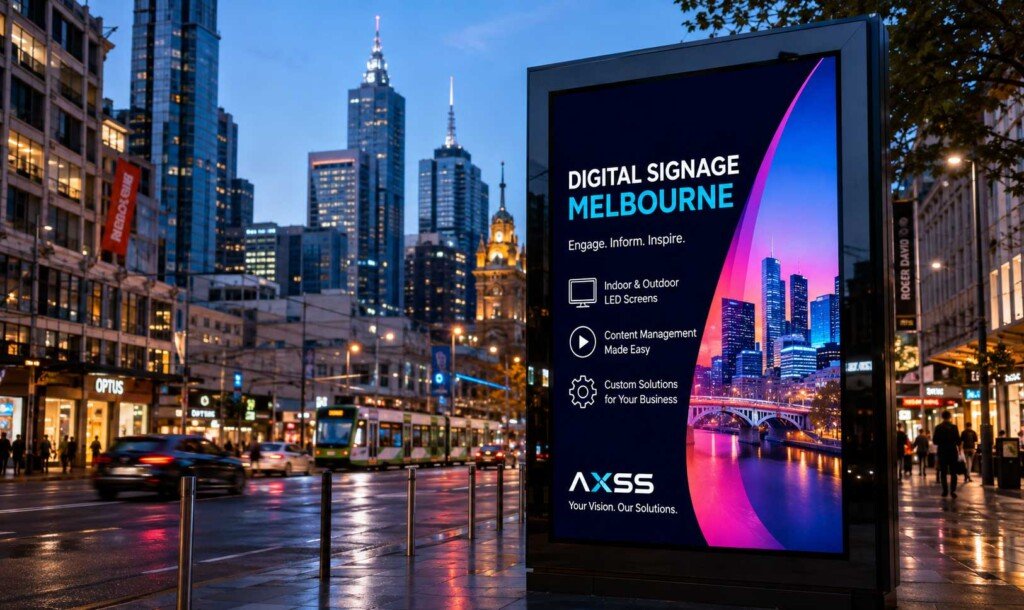
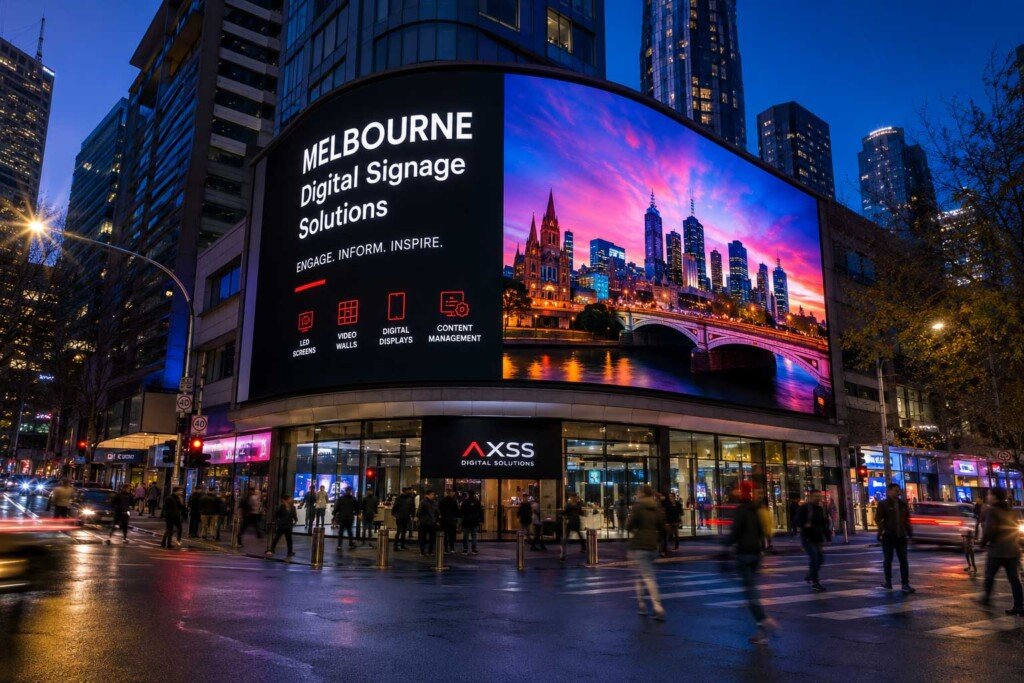
AXSS provides customised digital signage solutions for businesses across Melbourne. Our services include commercial digital displays, indoor and outdoor LED screens, LED video walls, transparent LED displays, content management systems, professional installation and ongoing technical support.
Every project is planned around the site, audience, viewing distance, lighting conditions and business objective. Rather than simply supplying a screen, we help create a complete visual communication system designed to perform reliably in a commercial environment.
What Is Digital Signage?
Digital signage is a system used to display videos, images, menus, prices, advertisements, directories, announcements and other information through commercial screens. Content can usually be scheduled and updated remotely through a digital signage content management system.
A complete solution may include:
- Commercial LCD displays
- Indoor or outdoor LED screens
- Media players
- Cloud-based content management software
- Wall, ceiling or freestanding mounts
- Network connectivity
- Remote monitoring
- Content templates and scheduling
- Installation and maintenance services
Digital signage is different from a domestic television. Commercial displays are designed for longer operating hours, professional mounting, portrait or landscape orientation, remote control and more demanding environments. They can also offer higher brightness, improved cooling and better reliability for customer-facing applications.
For Melbourne businesses, this flexibility makes digital signage suitable for both everyday communication and large-scale advertising.
Digital Signage Solutions Available in Melbourne
Indoor Commercial Displays
Indoor digital displays are ideal for retail stores, reception areas, waiting rooms, restaurants, offices, gyms, clinics, universities and showrooms. They can display promotions, visitor information, videos, menus, schedules, safety messages and branded content.
The screen can be mounted on a wall, suspended from a ceiling, installed in custom joinery or placed on a freestanding structure. Displays may be used individually or combined into a coordinated multi-screen network.
The correct screen depends on room lighting, viewing distance, operating hours and content type. A bright retail environment may require a different display from a softly lit office reception area.
High-Brightness Window Displays
Standard screens often become difficult to see when placed behind glass. Reflections and daylight can make images appear faded, especially in Melbourne shopfronts exposed to direct sunlight.
High-brightness window displays are designed to remain visible in stronger ambient light. They are commonly used by real estate agencies, travel businesses, banks, retailers, car dealerships and service providers.
LED Video Walls
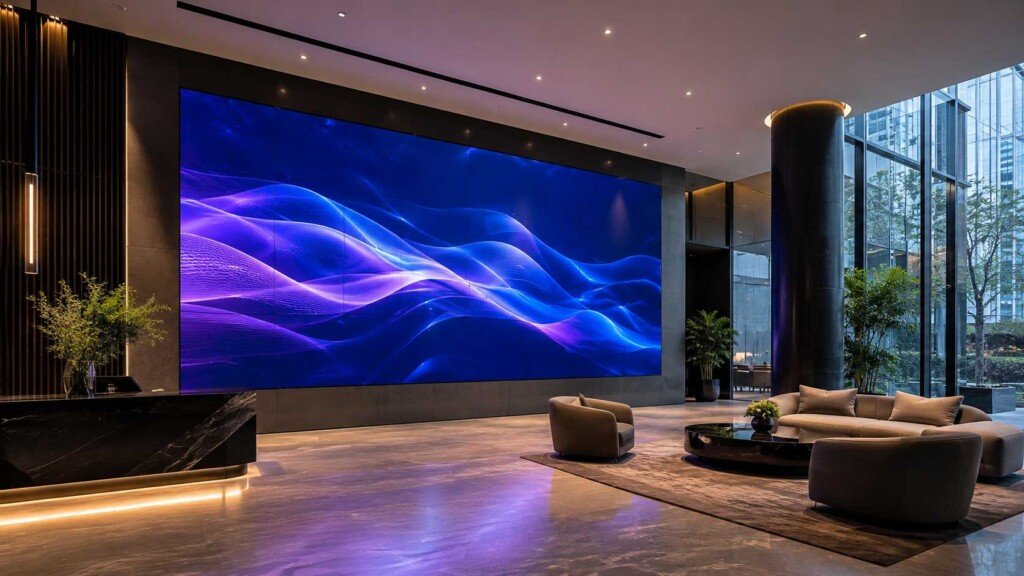
An LED video wall creates one large visual canvas using modular LED panels. It can be built in custom dimensions and does not have the visible bezel lines associated with traditional multi-screen video walls.
LED video walls are suitable for:
- Corporate lobbies
- Retail flagships
- Showrooms
- Event venues
- Auditoriums
- Control rooms
- Sports facilities
- Entertainment spaces
- Exhibition environments
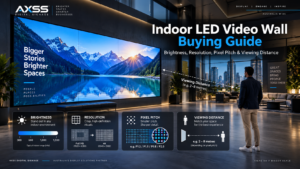
The most important technical consideration is pixel pitch, which describes the distance between the LEDs. A smaller pixel pitch provides more detail for close viewing, while a larger pitch may be more economical and effective when the audience is farther away.
The best choice is not automatically the smallest available pixel pitch. The screen should be specified according to real viewing conditions, content and budget.
Outdoor LED Screens
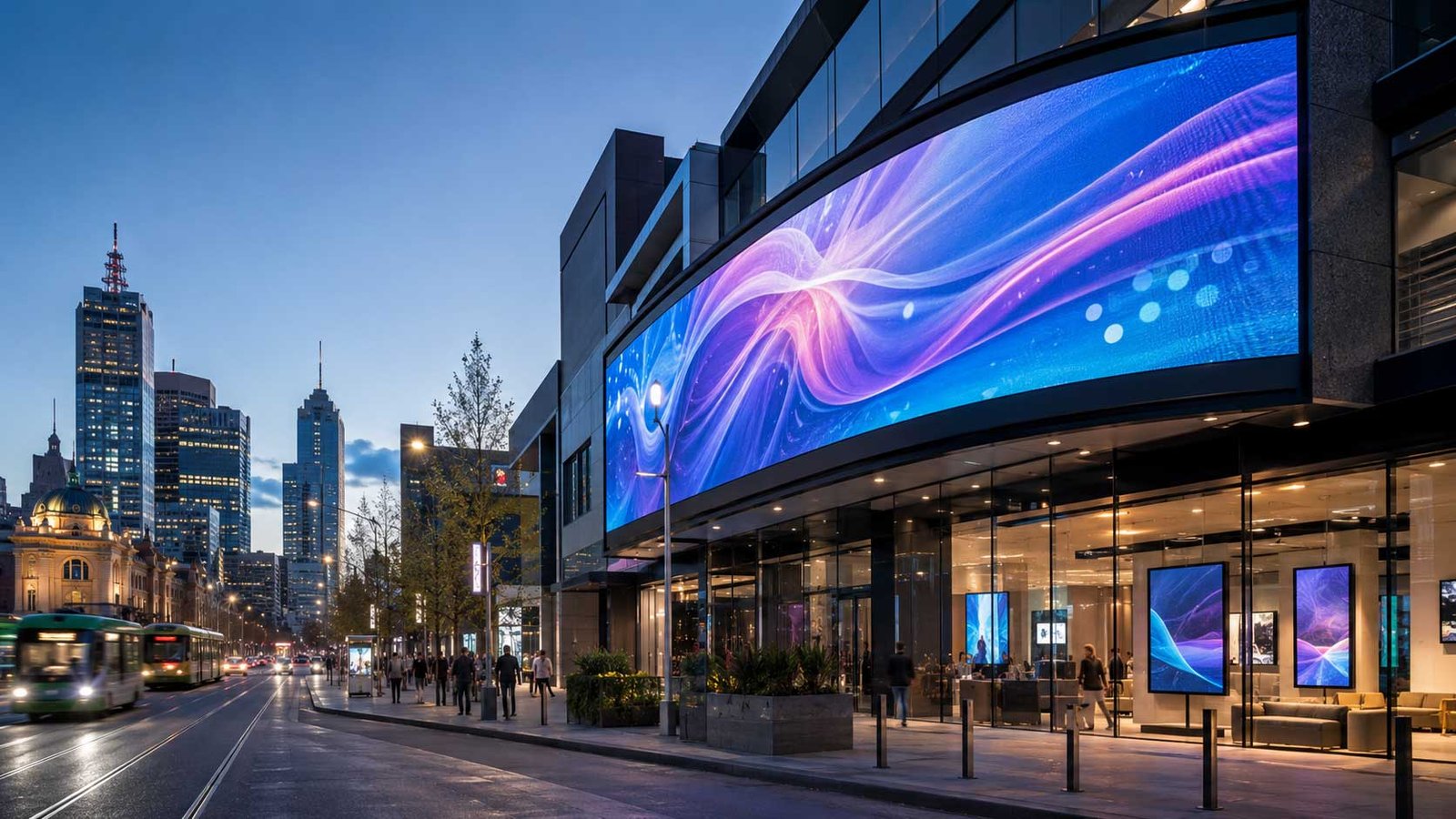
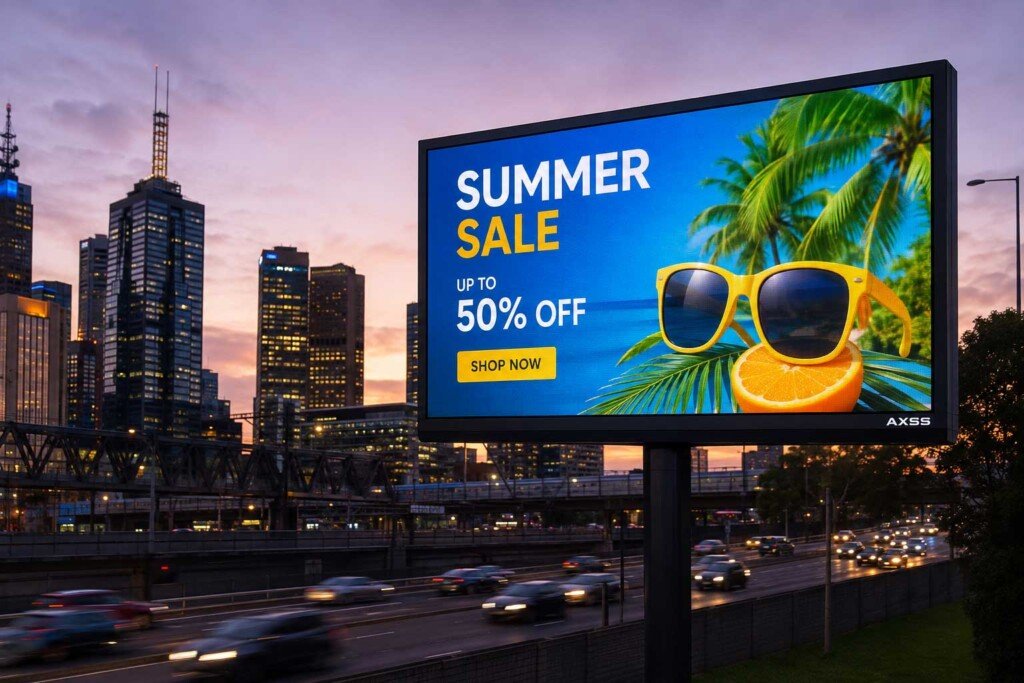
Outdoor LED screens are designed to create strong visual impact in open-air environments. They can be used for advertising, business identification, venue communication, event information, scoreboards, promotions and public announcements.
Unlike indoor screens, an outdoor display must be engineered for weather exposure, heat, moisture, dust, wind and changing light levels. Important considerations include screen brightness, weather resistance, structural support, drainage, ventilation, electrical safety and maintenance access.
An outdoor LED screen should also be selected according to the audience. A pedestrian-facing screen viewed from several metres away needs a different pixel pitch and content style from a roadside display viewed from a moving vehicle.
Brightness must be controlled carefully. The screen needs enough output to remain visible during daylight, but it should also reduce brightness after sunset to minimise glare and unnecessary light spill.
Transparent LED Displays
Transparent LED technology allows digital content to appear across glass while maintaining partial visibility through the display. It can turn a window or glazed architectural area into an eye-catching digital feature without completely blocking the view.
Transparent LED screens are often used in:
- Retail windows
- Car showrooms
- Galleries
- Exhibition stands
- Shopping centres
- Corporate environments
- Hospitality venues
They work particularly well with bold animation, high-contrast graphics, product silhouettes and short messages. Detailed layouts with small text are usually less effective because transparency and ambient light influence the image.
Digital Signage for Different Melbourne Industries
Retail Stores
Digital signage helps retailers promote products, explain features, launch campaigns and influence purchase decisions. Shopfront screens can attract passers-by, while in-store displays can support customers as they move through the buying journey.
Content can be updated for seasonal promotions, new arrivals, clearance campaigns and local events. A retailer with several stores can publish one campaign across all locations while still allowing individual branches to display local offers.
Restaurants, Cafés and Hospitality Venues
Digital menu boards allow hospitality businesses to update prices, availability and promotions without printing new menus. Content can change automatically between breakfast, lunch and evening service.
Screens may also be used for event schedules, welcome messaging, booking information, entertainment, sponsor content and upselling. Clear hierarchy is essential: customers should be able to understand products and prices quickly without being distracted by excessive movement.
Corporate Offices
Corporate digital signage can improve communication in reception areas, meeting zones and staff spaces. Organisations can display visitor welcomes, company news, performance dashboards, safety information, event schedules and internal announcements.
A large LED wall in a lobby can also become a strong architectural feature that communicates the company’s brand and capabilities to clients and employees.
How to Choose the Right LED Screen
Screen Size
The screen should be large enough to be noticed and understood from the expected viewing location. A larger screen does not always produce a better result. Its size must relate to the available space, content, audience and surrounding architecture.
Pixel Pitch
Pixel pitch affects image detail and recommended viewing distance. Fine-pitch LED is designed for closer viewing, while larger pitches can work well for outdoor screens and long-distance applications.
Choosing an unnecessarily fine pixel pitch can increase cost without creating a meaningful improvement for the audience. A professional site assessment helps identify the most suitable balance between image quality and budget.
Brightness
A screen in a dim indoor space requires much less brightness than an outdoor screen in direct sunlight. Excessive brightness can cause discomfort, waste energy and create complaints, while insufficient brightness makes content difficult to see.
Outdoor systems should support scheduled or automatic brightness adjustment so the display can respond to changing conditions throughout the day.
Viewing Angle and Distance
The position of the audience determines screen height, orientation, pixel pitch and content design. Displays should remain visible from the areas where people naturally walk, wait or make decisions.
Obstructions, columns, reflections, traffic direction and surrounding signs should be evaluated before installation.
Weather and Environmental Protection
Outdoor screens must be selected and installed for the specific environment. Exposure to rain, dust, heat, wind, salt air and direct sunlight can influence cabinet construction, corrosion protection, cooling and maintenance requirements.
The enclosure rating alone does not guarantee a successful installation. The entire structure, power system, cable routing and service access must be planned together.
Content Management and Remote Scheduling
The content management system is what transforms a screen into a practical communication tool. It allows authorised users to upload media, create playlists, schedule campaigns and update screens remotely.
A business can schedule content according to:
- Time of day
- Day of the week
- Store location
- Screen group
- Campaign date
- Audience type
- Product availability
- Events or seasons
For example, a café can automatically change its menu after breakfast. A retailer can start a promotion across all stores at the same time. A corporate office can show different content in reception, meeting areas and staff rooms.
The platform should also support user permissions, offline playback and monitoring. If the internet connection is interrupted, previously downloaded content should continue playing where the system supports local caching.
Good digital signage content is not the same as a website or printed brochure. It needs short messages, strong contrast, clear hierarchy and readable typography. The audience may only look at the screen for a few seconds, so each scene should communicate one primary idea.
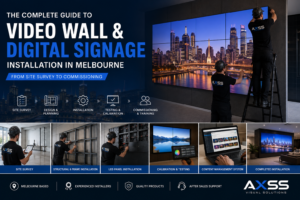
Our Digital Signage Installation Process
1. Consultation
We begin by discussing your objectives, audience, location, preferred content and budget. This helps identify the display format most likely to achieve the desired result.
2. Site Assessment
The site is reviewed for measurements, viewing distance, ambient light, mounting conditions, power, data, maintenance access and potential planning constraints.
3. Solution Design
AXSS recommends the display type, dimensions, brightness, pixel pitch, mounting system, media player and content management approach. The solution is customised to the location rather than based on a generic package.
4. Installation Planning
Before installation, we coordinate access, mounting, electrical requirements, cable routes, equipment delivery and commissioning. Larger projects may also require structural engineering or specialist trades.
5. Professional Installation
The display is installed, aligned, connected and tested. Brightness, colour, playback and network settings are configured for the intended environment.
6. CMS Setup and Training
Users receive access to the content platform and guidance on uploading, scheduling and managing content. Permissions can be configured for organisations with several staff members or locations.
7. Ongoing Support
After installation, ongoing support and maintenance help keep the display operating effectively. Remote assistance can resolve many content and configuration issues, while on-site servicing may be arranged when physical work is required.
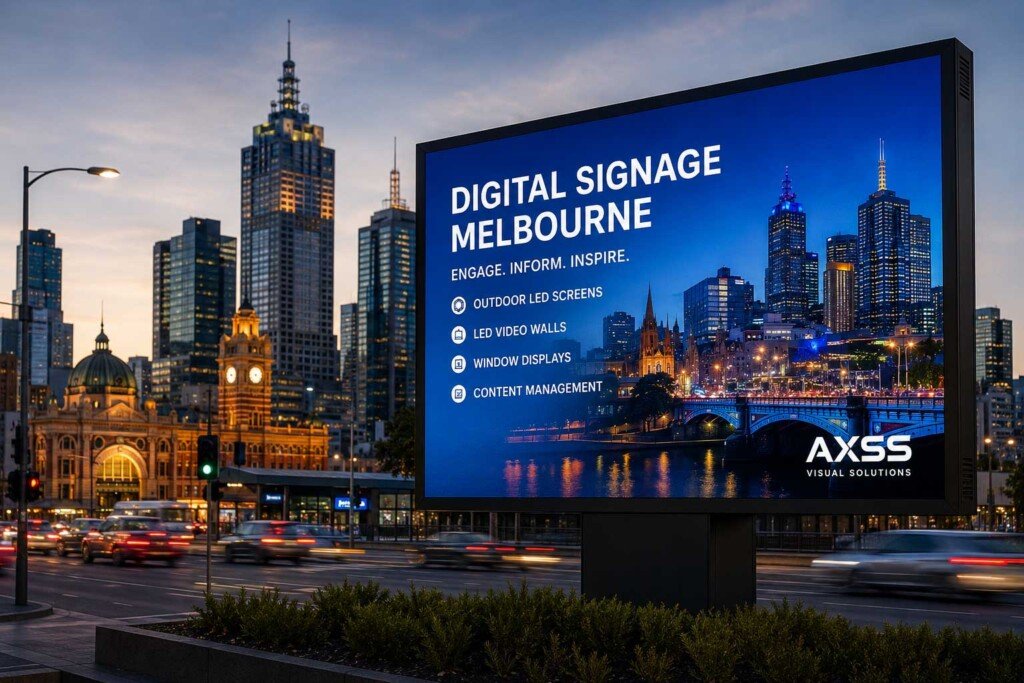
Digital Signage Installation Across Melbourne
AXSS can develop digital signage and LED display solutions for businesses across metropolitan Melbourne, including the CBD, Docklands, Southbank, Richmond, South Yarra, Carlton, Brunswick, Fitzroy, Collingwood, Port Melbourne, St Kilda, Dandenong, Clayton, Moorabbin, Tullamarine, Truganina and surrounding commercial areas.
Every suburb presents different conditions. A CBD screen may need to work within a dense visual environment, while an industrial-site display may be viewed from a greater distance. A retail window in South Yarra may require strong daylight visibility, while a warehouse or logistics facility in Truganina may prioritise operational information and durability.
The solution should always be designed around the specific site rather than the suburb name alone.
Planning and Approval Considerations
Some illuminated, electronic or animated signs may require a planning permit. Requirements can vary according to the local council, planning zone, overlays, sign size, location and proximity to roads or residential areas.
Electronic signage near a freeway or arterial road may also be reviewed for matters such as orientation, luminance, driver distraction and road safety. Because requirements vary by site, businesses should confirm the applicable planning controls before manufacturing or installing an outdoor screen.
A well-planned application may need drawings, dimensions, mounting details, operating hours, brightness information, content behaviour and information about surrounding properties or roads.
Starting the approval review early can prevent delays and reduce the risk of designing a display that cannot be installed as proposed.
Why Choose AXSS for Digital Signage in Melbourne?
AXSS provides more than display hardware. We help businesses plan a complete solution covering screen selection, design, installation, content management and ongoing support.
Our approach includes:
- Solutions tailored to your location and objectives
- Indoor and outdoor commercial display options
- LED video walls and transparent LED technology
- Professional installation and configuration
- Remote content management capability
- Technical guidance and after-sales support
- Scalable solutions for one location or multiple sites
The right digital signage system should be easy to manage, reliable in daily operation and appropriate for the audience. Our team works with you to understand the environment and recommend technology that supports your business rather than creating unnecessary complexity.
Frequently Asked Questions
How much does digital signage cost in Melbourne?
Cost depends on screen type, dimensions, brightness, pixel pitch, mounting, media players, software, installation access and electrical or structural requirements. A site assessment is the best way to prepare an accurate quotation.
Can I update the screen remotely?
Yes. Compatible systems can be managed through a cloud-based content platform, allowing authorised users to upload, schedule and change content from another location.
Are outdoor LED screens waterproof?
Outdoor LED displays are designed with weather-resistant components, but the required protection level depends on the site. Proper enclosure design, drainage, cable protection and installation remain essential.
What pixel pitch do I need?
Pixel pitch should be chosen according to viewing distance, content detail and budget. Close-view screens generally require a finer pitch than displays viewed from farther away.
Can you install screens across multiple Melbourne locations?
Yes. A multi-site system can be designed with central content management while allowing location-specific playlists and permissions.
Do I need a permit for an outdoor digital sign?
Possibly. Permit requirements depend on the council, planning controls, sign type, size, location and surrounding environment. Approval should be checked before installation.
What content works best on digital signage?
Short messages, bold imagery, strong contrast and a clear call to action usually perform best. Content should be designed for the viewing distance and the amount of time the audience has to read it.
Request a Digital Signage Quote in Melbourne
A successful display project begins with the site and communication objective, not with a product catalogue. Screen size, brightness, pixel pitch, mounting, software and content should all work together as one system.
Whether you are planning an indoor commercial display, a shopfront screen, a transparent LED installation, an LED video wall or a large outdoor LED screen, AXSS can help you develop a solution suited to your Melbourne location.
Contact AXSS today to discuss your project, arrange a consultation and request a tailored quotation for digital signage or outdoor LED screens in Melbourne.